

All photographs by the author
“I am my beloved’s, and my beloved is mine: he feedeth among the lilies.
A garden enclosed is my sister, my spouse; a spring shut up, a fountain sealed.
Awake, O north wind; and come, thou south; blow upon my garden, that the spices thereof may flow out.”
Song of Songs 6:3, 4:12, 4:16
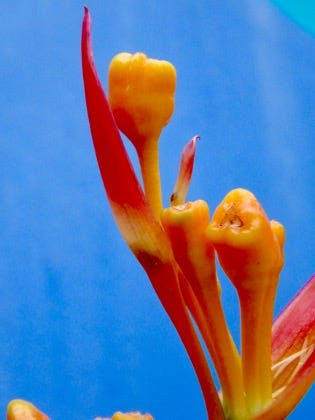
Unashamedly Sexual
A flower is a reproductive organ, on public display, in colour, and often in scent strong enough to carry considerable distance. We forget this because we have spent so many centuries turning flowers into metaphors: purity, innocence, the fleeting nature of youth. But strip away the metaphor and what remains is an intricate mechanism for reproduction. The petals attract. The scent summons. The whole elaborate structure exists so that one plant’s pollen can find its way into another plant’s ovary. Human beings did not invent courtship, concealment, invitation, and consummation. We recognise them in living beings and routinely meet them in our gardens.
The Architecture of Desire
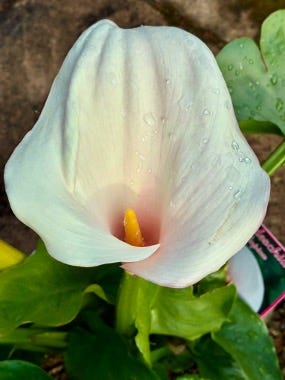
Look closely at a calla lily and the sexual resemblance needs no elaboration. A single white spathe curls around a yellow spadix, upright, faintly luminous, unmistakable in its suggestion; Georgia O’Keeffe built a large body of work by looking at flowers exactly this closely. Botanists will tell you, correctly, that the spadix is simply a spike of tiny flowers, and that the spathe is a modified leaf that protects them. I do not dispute the botany. I only note that nature, having produced this shape by the logic of pollination, has repeated it in many other living things. flower is a reproductive organ, on public display, in colour, and often in scent strong enough to carry considerable distance. We forget this because we have spent so many centuries turning flowers into metaphors: purity, innocence, the fleeting nature of youth. But strip away the metaphor and what remains is an intricate mechanism for reproduction. The petals attract. The scent summons. The whole elaborate structure exists so that one plant’s pollen can find its way into another plant’s ovary. Human beings did not invent courtship, concealment, invitation, and consummation. We recognise them in living beings and routinely meet them in our gardens.
The Architecture of Desire
Look closely at a calla lily and the sexual resemblance needs no elaboration. A single white spathe curls around a yellow spadix, upright, faintly luminous, unmistakable in its suggestion; Georgia O’Keeffe built a large body of work by looking at flowers exactly this closely. Botanists will tell you, correctly, that the spadix is simply a spike of tiny flowers, and that the spathe is a modified leaf that protects them. I do not dispute the botany. I only note that nature, having produced this shape by the logic of pollination, has repeated it in many other living things.
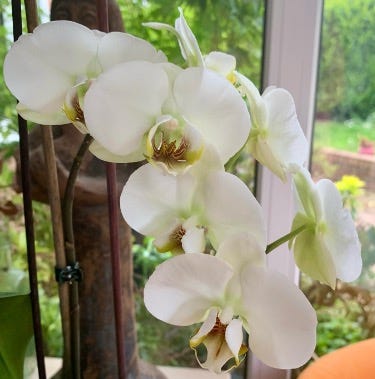
Some flowers take the game of resemblance further. Several species of orchid have evolved to mimic, in colour, texture, and above all in scent, the female of a particular species of bee or wasp. A male insect arrives, attempts to mate with the flower, and in his frustrated efforts collects and delivers pollen. Entomologists call this “pseudocopulation”, a wonderfully clinical word for what is, from the orchid’s point of view, an act of pure seduction, and from the insect’s, an elaborate and repeated humiliation. Orkhis is Greek for testicle, a name Theophrastus gave the plant for the shape of its paired root tubers. The medical term for an inflammation of the testicles is orchitis!
Pollination as Courtship
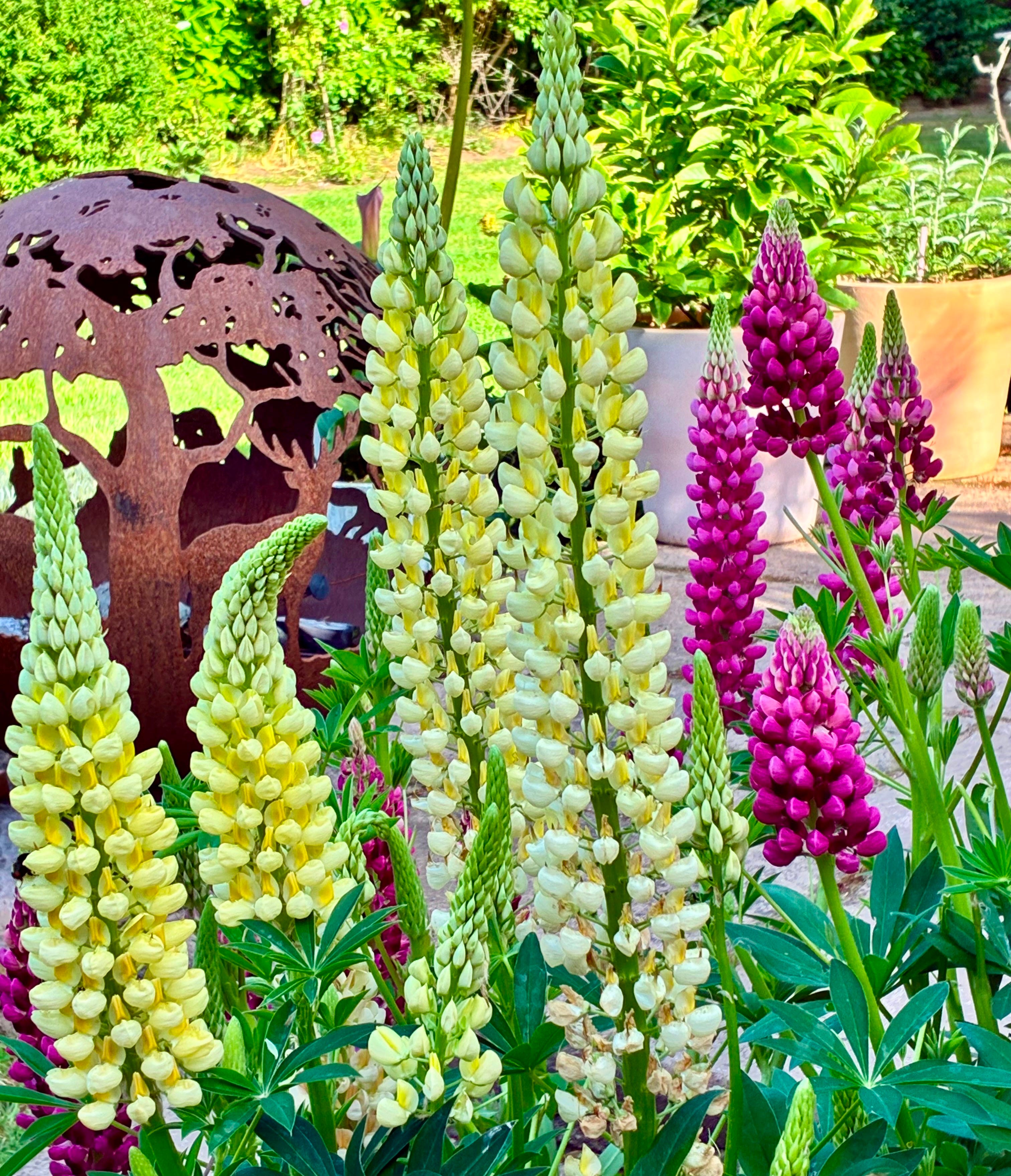
In the first essay of this series I described watching a bumblebee moving from lupin to lupin in my garden, and remarked that each petal resembled a hand folded in anjali, an Indian hand position welcoming the bee inside. The bee was pushing its way into a chamber built precisely to dust its underside with pollen, so that it might carry that pollen, unknowingly, to the next flower, and the next, across a garden that had become, from the plant’s point of view, an afternoon of orgies by proxy.
This is courtship without cupid. The flower cannot choose; it can only attract, as its resources allow. Colour, symmetry, fragrance, even the ultraviolet nectar guides invisible to us and blazing to a bee, all of it is advertisement in the oldest sense of the word: a public announcement of availability. Human courtship, for all its complications, its vows and its coyness, its centuries of poetry, is not a very different phenomenon. It is the same instinct, with a great deal of tumultuous anxiety along the way.
Roses, Jasmine, and Giving
We give flowers to the people we desire because we have always understood, at some level, what a flower is for. The rose carries the heaviest of this symbolic weight. In the Western tradition the Greeks and Romans gave it to Aphrodite and Venus and told several overlapping stories of its origin in the goddess’s blood or tears. Rome later hung a rose from the ceiling of a room in which confidential matters were discussed, so that anything said sub rosa, under the rose, was bound to secrecy; the flower of desire became, by a natural extension, the flower of things not meant to be repeated.
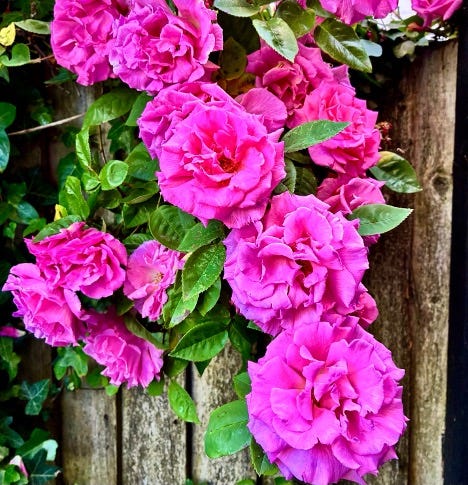
In Urdu and Persian poetry Gul (flower or rose) and Gulab (rose, literally rose-water) represent absolute beauty, perfection and the beloved. In India, jasmine, (mogra or chameli) performs a related function. It is threaded into the hair of women at weddings and temples alike, worn for the gods and for a lover with no sense of contradiction, because Indian devotion has never kept the sacred and the erotic apart, as anyone who has seen the copulation carvings on the walls of temples of Khajuraho and Konark will know. A bride at a Sikh wedding may wear garlands of marigold and jasmine, and no one in the wedding party would think to ask whether the fragrance around her neck is there to honour the ceremony or to announce her beauty. It is there to do both; the two purposes were never distinct.
The Lotus and the Present Moment
The lotus is at once the most devotional and the most erotic of flowers. It rises from mud, opens on water, and closes again each evening, a daily performance of concealment and revelation that Indian and Buddhist iconography has read for millennia as a symbol of the awakened mind. Lakshmi, the Indian Goddess of wealth, arose from the ocean seated on a lotus, which in this context is a symbol of both beauty and abundance.
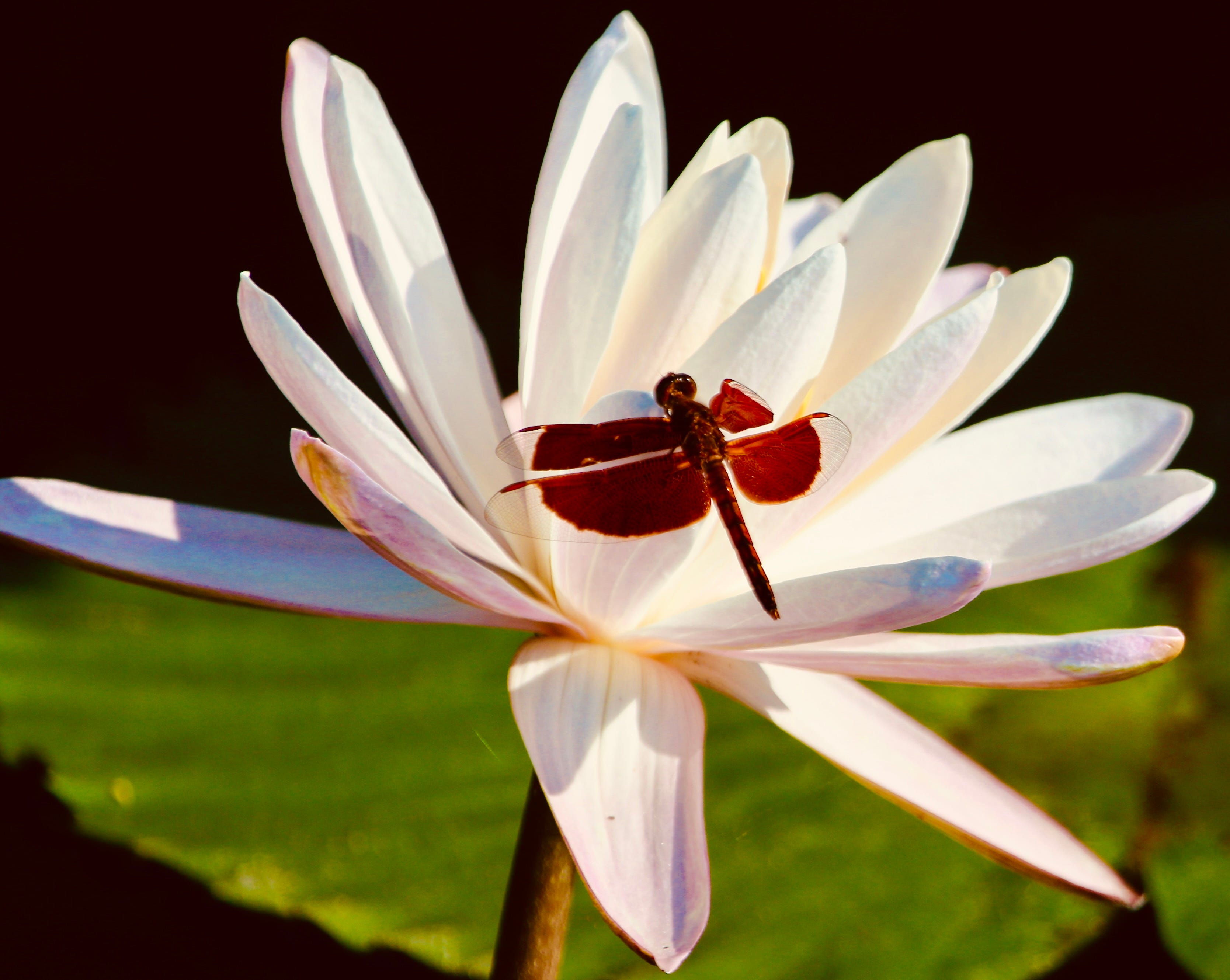
A dragonfly rested on a waterlily in my photograph for perhaps four seconds before it left. I happened to have a camera ready. The Japanese have a word for the feeling this produces, mono no aware (the pathos of things) which is bittersweet awareness that a thing is beautiful partly because it will not stay. They apply it most famously to cherry blossom, which does not fade slowly on the branch but falls, all at once, at the height of its beauty, and is gone within days. I wrote, in the third essay of this series, about flowers at funerals and weddings, and noted that a flower’s beauty and its transience are linked. Desire is similar; it is not diminished by its own impermanence but sharpened by it.
What a Flower Says
A flower offered in love is not a metaphor in need of decoding. It says, without needing translation into any language: I saw this beauty and thought of you. It does not argue, apologise, or explain, and it does not need to undress because its meaning was never hidden. This, I think, is why we still do it, long after greetings cards and text messages made other gesture of courtship faster and cheaper. A cut flower is slow, perishable, and defiantly useless in its utilitarian sense. We give it because, for a few days, it says what we cannot say as economically, or as honestly, ourselves.
“The flowers withered, their colour faded away,
while meaninglessly I spent my days in the world,
and the long rains were falling.”
Ono no Komachi, Kokin Wakashu