

“Freedom’s just another word for nothing left to lose.” Kris Kristofferson, Me and Bobby McGee
Nothing to lose or gain?
I was 16 when I first heard this line in Janis Joplin’s hauntingly beautiful voice. I was young enough to feel confined and old enough to feel restless. I grew up in a world saturated with religious, cultural, and moral certainty. My family were devout Sikhs. Family rules were strict, and schools were even stricter.
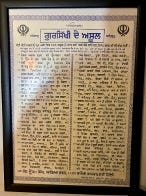
My father had famously produced a poster of 32 rules for living a Good Sikh life, each rule composed of 32 letters in the Punjabi script. Life should be hard work, religious devotion, service to the community, and avoidance of all fripperies. Everything had a prescribed place. To my adolescent mind, freedom lived somewhere else. In the West. In Woodstock, the film I had seen for five consecutive days during its seven-day screening at a local cinema. Bob Dylan was a prophet, Jimi Hendrix a wizard, and Crosby, Stills Nash and Young reminders that I was “billion-years old stardust”. I knew that such freedom existed, but it was elsewhere, too remote for me to reach, let alone live in.
Back then, that song line felt like a revelation. To have ‘nothing left to lose’ meant that nothing could be taken from you. You would be beyond family and societal pressures. Beyond leverage. Beyond fear. Life, as I lived it then, was a long drill in accumulating marks, exams, approvals, failures, and trying again. Success always receded slightly ahead and was of a kind I did not really want anyway. Freedom, as the song suggested, must lie at the far end of an exhausting road, when there is nothing left to lose. You would have no rules, responsibilities, or obligations. You would be free.
What did I desire then?
Now, in my seventh decade, the same line sounds different and less true.
If I were to rewrite it, I would say: freedom is just another word for nothing left to gain.
With time and a modest measure of worldly success, I see a different pattern in the unfolding of my life. My adolescence was characterised by striving for what seemed unattainable. The restless wanting was for a forbidden fruit. I wanted to be free from rules and free to fulfil my primaeval desires. Unbeknownst to myself, in my search for freedom, I bound myself to craving. I was chasing expressions of erotic desire, freedom from rules, roles, and responsibilities, and the freedom to be ‘authentic’.
I did not know myself, let alone what authenticity meant. William Blake said that the road of excess leads to the palace of wisdom. I wanted excess more than I wanted to reach the palace of wisdom. I had none of the Woodstock generation’s freedoms, let alone excess. I craved them and sought freedom from obligations. I was not seeking freedom. I was entrapped by my desires.
What is desire?
Looking back, I realise that my youthful restlessness was not just a personal rebellion, but my first encounter with a fundamental human tension that the world’s great spiritual traditions have sought to decode for millennia. This realisation eventually shifted my perspective from a search for external escape to an enquiry into the nature of wanting itself.
Most religious traditions, despite their surface differences, converge on a surprisingly similar insight: desire is not the enemy. What causes suffering is not wanting but misdirected wanting.
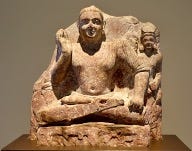
Buddhism is the most explicit. The Buddha taught that craving (tanhā, literally thirst) lies at the root of suffering, not because pleasure is evil but because craving grasps at what is impermanent. When desire clings to what cannot last, it destabilises the mind. Peace does not come from satisfying desire but from loosening its grip.
Other traditions arrive at similar conclusions through different routes. Hinduism recognises desire (kāma) as a legitimate aim of life, but only when it is balanced by discernment and ethical grounding. Desire becomes destructive when it overrides judgment and turns compulsive. Christianity similarly distinguishes between disordered desire (epithymia) and rightly ordered love (agape). It is not longing itself that leads us astray, but longing aimed at the wrong objects. Augustine called this ordo amoris: the proper ordering of love.
Islam frames the struggle in terms of the nafs, the desiring self that can incline either toward ego or toward God. Desire is not to be eliminated but rather disciplined through inner effort and remembrance. Judaism, too, treats desire as double-edged: without it, there would be no creativity, intimacy, or continuity of life; yet, left unchecked, it can dominate moral awareness.
Even Taoism, which avoids moral language altogether, sees desire as something that narrows one’s perception. When desire dominates, we see only fragments; when it quietens, reality reveals itself more fully.
A shared pattern emerges across these traditions. Desire is not condemned as immoral but is understood as absorptive. It captures attention, distorts perception, and shrinks the field of awareness. In this sense, desire is less a moral failure than a thief of attention.
Freedom, then, is not found in the multiplication of wants but in recovering the capacity to see clearly.
The cage of craving
I did not understand any of this during my youth. I thought freedom meant the expansion of desire: more choice, more pleasure, more possibility. What I see now is that desire itself is the trap. Even the desire for comfort can become a form of captivity.
The modern world is very good at feeding this type of hunger.
It is less effective at noticing when hunger becomes endless.

For most of my adult life, I have craved. Whether it is good food, luxuries, fame, a higher h-index, more citations, or greater applause from the audience at a conference, it is all an effort to fill the void within. The more I sought, the larger the void became. Egoic comparisons with others are endless and endlessly enhance desire.
In my seventh decade, I have finally understood that freedom and desire are inversely related, whereas gratitude and a sense of abundance are positively related to freedom.
Freedom’s silent arrival
Although there are nuanced and subtle differences in the nature of desire across religious traditions and how to deal with it, there are also striking similarities. The Upanishads tell us that: “When all the desires that dwell in the heart fall away, then the mortal becomes immortal, and attains Brahman.”
Moksha or freedom is not an escape into something but a release from the tyranny of wanting. Christianity frames freedom in the same paradoxical way. Jesus said, “You shall know the truth, and the truth shall set you free.” Paul went further: “I am free, yet I make myself a servant of all.”
Freedom is not about having nothing left to lose. It was always about having nothing left to gain.
Such freedom has come to me late and almost unnoticed. Not through wanting and getting more, but through giving. The more I give to my patients, students, those who ask for guidance, or those who simply need to be heard and understood, the lighter I feel. I no longer need the world to complete me. Something in me feels full and flows outwards. That old song has not changed. I have. Somewhere along the way, Kristofferson’s line has been turned inside out.
The abundance of being abundant
This is not emptiness. It is abundance. Not the absence of loss but the absence of craving.
In another blog, I will return to the question that quietly remains: do we truly overcome desire, or is the deeper task to tame it rather than eradicate it? Perhaps desire is not an enemy to be destroyed but a wild horse to be restrained, the same image as I wrote about in an earlier blog. Some fences restrain. Some also guide. Whether true freedom lies in conquering desire, restraining it, or retraining it is something I am still waiting to discover.
Another wonderful piece to start my day. It has blown my heart, no all of me, wide open. I have so much gratitude for your writing Swaran. This will again be helpful reassurance for a young person I know with parallel experiences to your younger self. What a gift you offer here.
For me, desire remains something to notice and take care of. More gentle than restraining. Definitely a process of gradual shifting over time. Including 'shifting' all that I have accumulated before this realisation!
Thank you Swaran.