

All photographs by the author
When Silence Creeps In
A few years ago, my family started complaining that I was ignoring them. They would call me or ask me to pay attention to something, and I would not respond. Initially, they attributed it to my usual absent-mindedness or the hyperfocus that overtakes me when I am reading, writing, or immersed in music. Eventually, they decided that it was deliberate and that I was choosing to ignore them.
When their complaints became sufficiently vociferous, I tried to explain that I was not ignoring anyone; I genuinely had not heard them. The realisation arrived slowly for the family, and for me, I was going deaf. If a penny had literally dropped, I would not have heard it.
Diagnosis and Retrospection
I underwent a hearing test and was told that I had severe deafness in my left ear and moderate to severe in my right, particularly affecting high frequencies. The cause was partly aging and partly the consequence of listening to very loud music in my youth.
Growing up, we did not have CDs or modern digital music. I owned a small tape recorder. There was a flourishing underground economy of transferring vinyl records onto cassette tapes for a small fee. Western music arrived years after becoming established hits in the West, and the selection was limited. When I stumbled upon rock and blues at around 14, it was love at first hearing.
Hard rock and heavy metal became my staple diet: Deep Purple, Black Sabbath, Led Zeppelin, The Doors, and Pink Floyd shaped my auditory imagination. Joan Baez, Bob Dylan, and Leonard Cohen brought poetry and politics, while Jethro Tull transported me to a British countryside populated by elves and goblins. Music has never been a background for me. It is essential to my identity and existence. The music of my youth was a way of inhabiting emotions I could not articulate, and inhabiting lands and cultures that seemed forever forbidden and beyond reach.
The sound quality was poor and lyrics difficult to discern. In Purple Haze, I heard Jimi Hendrix confessing to being gay: “excuse me, while I kiss this guy!” What I lacked in auditory acuity, I compensated for in volume. Once I entered medical school, escaping domestic constraints and sibling complaints about my musical tastes, the volume knob moved permanently to the max. Whenever I was not in lectures, I was listening to music loudly and continuously, even while studying. During the rare live performances available to me, I stood as close to the speakers as possible.
After arriving in the UK, I revisited many of the bands that had shaped my youth: reunions of Deep Purple, Nazareth, remnants of Uriah Heep, Bad Company, or tribute bands. With the arrival of headphones, my listening experience became even more intimate and intense. My musical tastes expanded to jazz, blues, and classical music, but loudness remained integral to the experience.
I was warned that I would damage my hearing. However, youth brings its own recklessness and absence of foresight. Even now, when I can, I listen as loudly as possible, with sound leaking through noise-cancelling headphones so that anyone nearby can hear it.
The Gift of Restoration
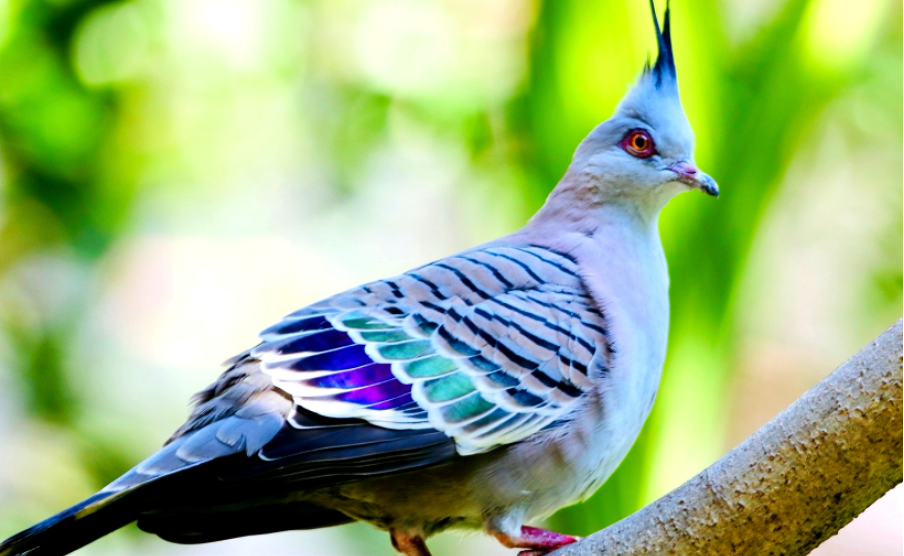
Once I acquired hearing aids, the first thing I noticed during my daily dog walks was the birdsong. I had not realised how completely I had lost the astonishing variety of sounds that fill the morning air. There was so much joyous sound all around me, where there had previously been silence. I attempted to count the number of bird calls I could distinguish, but I could not total them. Occasionally, just one would chirp or whistle, but when they all sang together, the soundscape was so full and luscious that I could identify neither individual components nor its contributors.
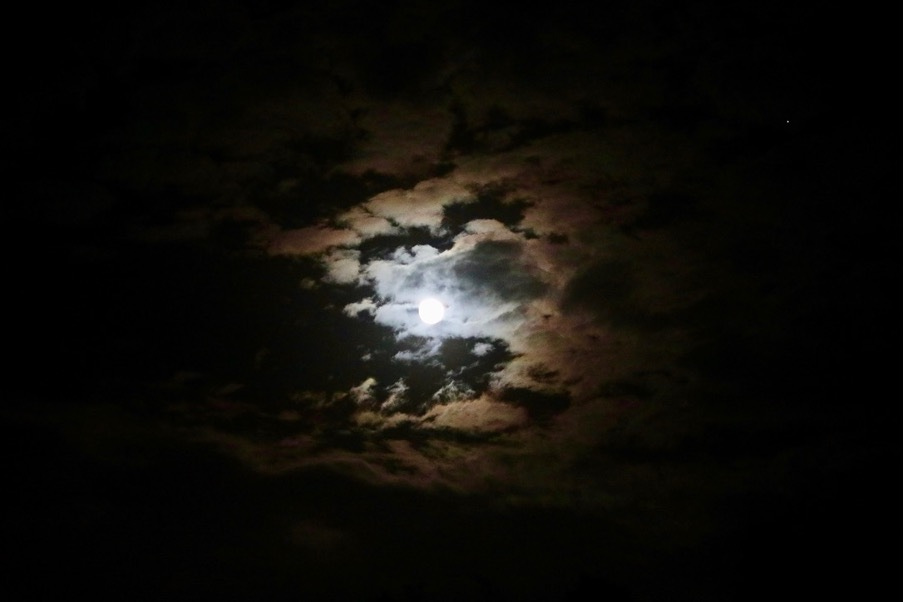
The greatest gift of my hearing aids has been the return of subtlety: the shimmer of cymbals in live performances, the delicate clarity of high notes, and the nuanced texture of spoken words in the theatre. What the audiologist had described as “high frequencies” was a galaxy of musical notes, each with its own signature imprint. This is how the early users of telescopes might have felt when a dark sky revealed its hidden luminosities in depth and breadth. Each new bird song was like another musical galaxy revealing itself to me.
A sudden loss is acutely felt, as I did when I fell, and my temporarily paralysed leg revealed the full force of gravity, as I have described here. When things are taken away very slowly, you do not miss them. Muscle mass fades. Memory shifts. Aging advances incrementally. Hearing loss belongs to this slow erosion.
Why Birds Sing
Hearing birdsong again made me curious not just about its beauty but also its purpose. I read that birdsong is not merely decorative background music; it is a biological necessity that has been shaped by evolution. Many birds sing to establish their territory. Songs allow individuals to signal ownership and deter rivals without physical confrontation. Birdsong is also a crucial element of mate attraction. In many species, females prefer more elaborate or precise songs, which may indicate neurological development and genetic quality. The complexity, endurance, and clarity of songs often function as signals of health and fitness. Juvenile birds sometimes learn songs from adult tutors, blending instinct with culture.
These explanations, as scientifically valid as they may be, do not satisfy. What Are birds saying to each other? Is it music or might it be poetry, ‘birdwords’ set to music? Might they be conversing about the banal? Have the chicks been fed? Whose turn is it to get the worm today? Is your mother visiting our tree again? Why have you not fixed that leak in the nest?
Who knows, except the birds? And does it matter? Beauty is beauty, regardless of its purpose.
The birds in my garden
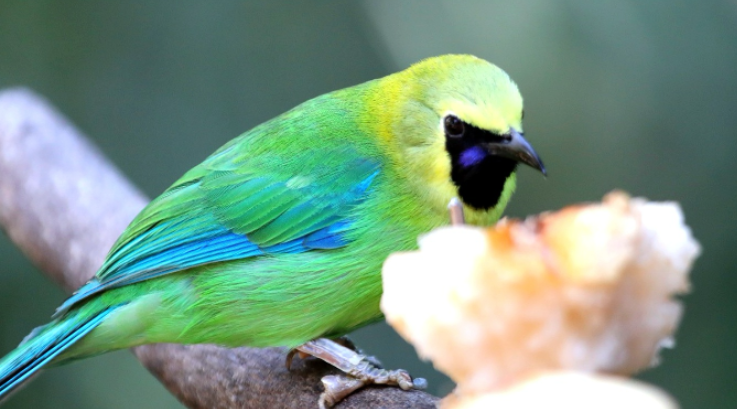
My ordinary English garden hosts an orchestra. I cannot tell them apart from their sounds, except for doves, ravens, and magpies, which have unusual sounds, none of which are high frequency. I googled the birds I could see in my garden and then heard them individually on YouTube. Over time, I came to recognise some songs. I learned that the delicate and melancholic phrases belonged to Robin. Rich flute-like melodies were delivered by the great tit, while the chaffinch produced energetic trills that ended with a flourish. I loved the song thrush with its repeated musical motif. The bassline of the wood pigeon had always been audible to me, and now several other sections of the orchestra had started playing too.
Competing with the City
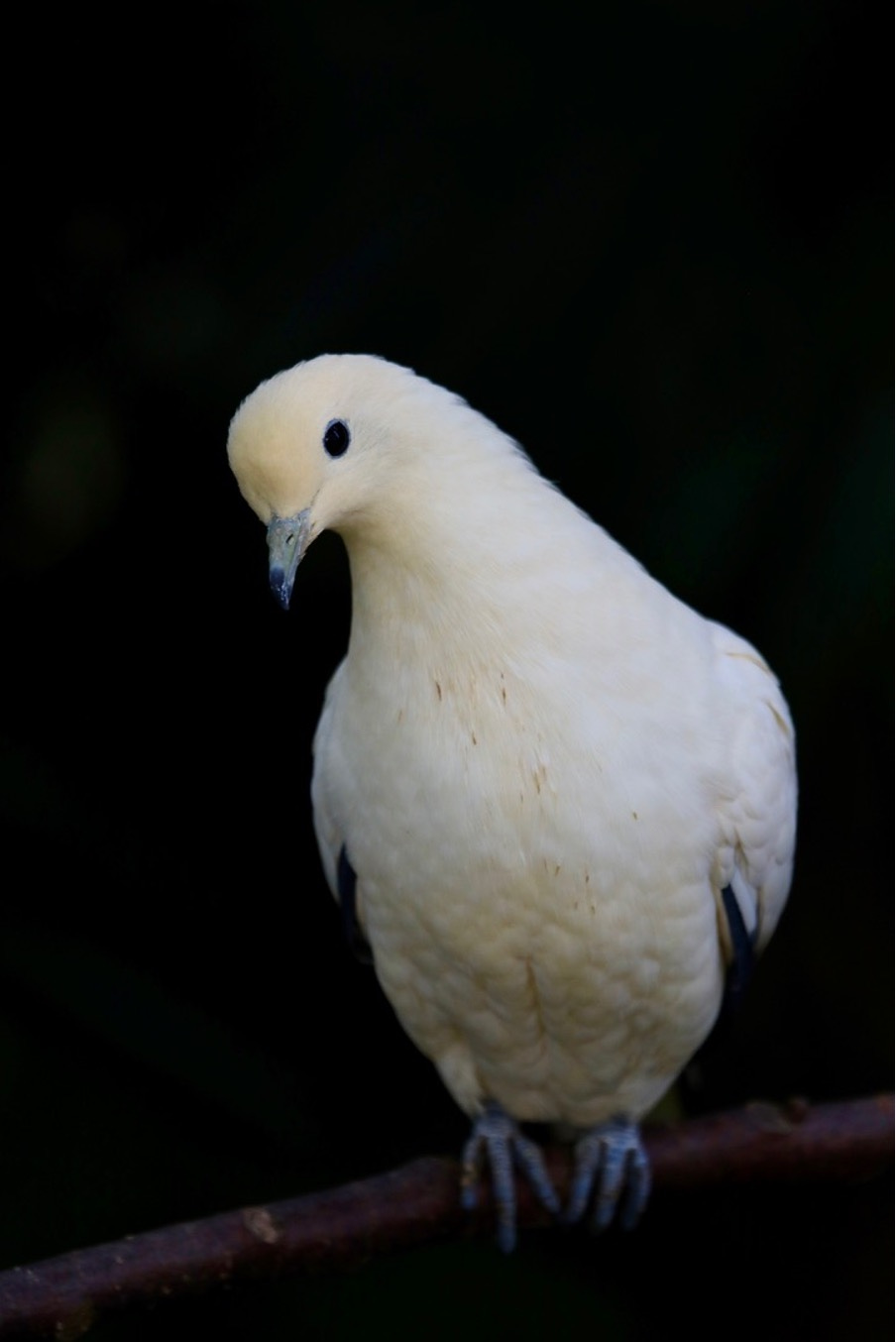
Once I started listening carefully, especially when comparing bird songs across the various countries I travel to, I noticed how the environment shapes sound. Birdsong adapts to habitat. Forest species often use lower frequencies that travel through vegetation, whereas urban birds sing louder or at higher pitches to overcome traffic noise, which is an evolutionary adjustment. In India, particularly in Delhi and Mumbai, cities I visit frequently, the morning soundscape is cacophonous. Birds compete with relentless noise of traffic, construction, and dense urban lifestyle.
Studies suggest that many urban birds increase both their vocal volume and pitch to remain audible above anthropogenic noise. The pigeon outside my brother’s apartment in Bombay coos so loudly that it penetrates the soundproof windows. One cannot help but feel pity for the birds. How long will they be able to increase their vocal output to compete with the ever-growing sounds of human civilisation?

Our modern marvels
Hearing restoration is a modern marvel that would have seemed miraculous a few generations ago. I had not missed birdsong in my deaf state, but what if my livelihood depended on it? I was suddenly struck by what it might have meant for Beethoven, whose entire being overflowed with music. What is it like to lose the ability that defines you?
Ludwig van Beethoven’s progressive deafness is a poignant and painful reminder of how previous generations, with no access to modern technology suffered without hope. My deafness is partial, whereas his was total. Even during periods of increasing silence, he composed some of the most revolutionary works in Western music. By the premiere of his Ninth Symphony in 1824, he was completely deaf. While conducting the performance, he continued to beat time even after the music ended, unaware that the audience was applauding wildly, until a performer turned him around to witness the ovation he could not hear.
Music as a Unique Event
Every morning, I hear similar sounds, but never the same. The Romanian conductor Sergiu Celibidache believed that every musical performance is an unrepeatable event. For this reason, he resisted commercial recordings, arguing that they could never capture the living, spatial, and temporal reality of sound unfolding in real time.
For Celibidache, music was not an object but an experience that exists only in the moment between performers, acoustics, and listener. Watch Celibedache conducting Ravel’s Bolero on YouTube. If God were a composer, he would be Celibidache. Listen and judge for yourself.
Celibidache would recognise the uniqueness of every dawn chorus, magical and magnificent, never to be repeated.
Every morning, birds provide us with a free musical performance, each one a unique event, each one a special performance, never to be reproduced again in the history of the universe. We often forget the music freely offered by the natural world, a living orchestra performing without tickets or announcements.
There are countless recordings of birdsong online, but these recordings cannot replicate the subtle interplay of weather, light, and presence that shapes each dawn chorus. I would rather listen to the unrepeatable harmony that unfolds outside my door each morning.
I thank my audiologist, my hearing aids, and my family for discovering my deafness and the unexpected gift of hearing restored. I cannot imagine what Beethoven must have felt as sound retreated from him.
“In each and every heart the Divine sings its song; some hear it, and blossom”. Sri Guru Granth Sahib, Sikh Holy book.
When I hear birdsong in the morning now, it is not just sound; it is attention asserting its presence. Hearing loss has taught me how to listen.

Hi Swaran, you might like to check out Merlin bird ID id you aren’t familiar with it?