

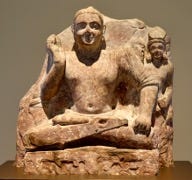
All photographs by the author
Buddha’s First Noble Truth (in Pali and English translation)
“Idaṃ kho pana, bhikkhave, dukkhaṃ ariyasaccaṃ:
Now this, monks, is the Noble Truth of suffering:
Jātipi dukkhā,
Birth is suffering,
Jarāpi dukkhā,
Aging is suffering,
Vyādhipi dukkhā,
Illness is suffering,
Maraṇampi dukkhaṃ;
Death is suffering;
Appiyehi sampayogo dukkho,
Association with what is unloved is suffering,
Piyehi vippayogo dukkho,
Separation from what is loved is suffering,
Yampicchaṃ na labhati tampi dukkhaṃ;
Not to get what one wants is suffering;
Saṅkhittena pañcupādānakkhandhā dukkha”.
In brief, the five aggregates subject to clinging are suffering.”
Pain and suffering
“Pain is unavoidable. Suffering is optional.”
This sentence has become a cliché, repeated whenever people wish to sound wise, kind, or reassuring. Its familiarity risks dulling its force. Yet repetition does not make it untrue. It only conceals a deeper truth.
Across cultures, languages, and centuries, human beings have distinguished between pain as an experience and suffering as what happens when pain is resisted, personalised, remembered, or feared. This essay is an attempt to examine that distinction; not to deny suffering, but to understand what sustains it.
The idea itself is ancient. Variations of it appear in Hindu Advaitic (non-dual) philosophy, in Buddha’s and Guru Nanak’s teaching, in Stoic philosophy, and in contemplative traditions across many cultures. But it is often misunderstood. The Buddha did not teach that suffering could be opted out of, as one might choose a different path or attitude. His first noble truth was simple: life, as it is ordinarily lived, involves suffering; not as an accident, but as a fundamental feature of human existence.
Pain and suffering in language and culture
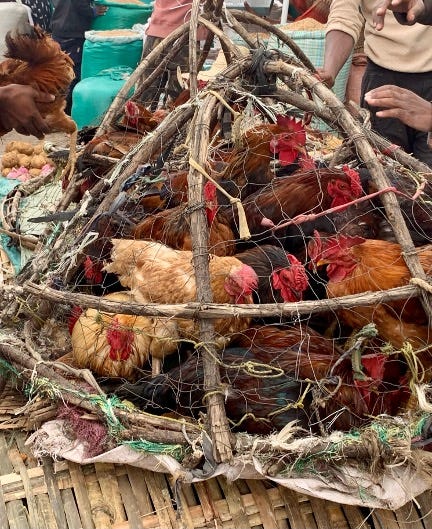
In Sanskrit and Hindi, pain is called pīḍā (pīṛ in Punjabi). The term dukkha, also used by Buddha, means suffering, and in most North Indian languages it carries the sense of existential dissatisfaction rather than mere physical pain. The commonest word for bodily pain or ache in Hindi, Punjabi and Urdu is dard, since pida can also mean an affliction, especially when it is meant to imply a state rather than a passing experience. Dukkha (suffering) is broader still: unsatisfactoriness, instability, the inability of experience to provide lasting fulfillment. Pain is part of this experience, but suffering runs deeper and wider. It is the unease that arises from impermanence, from loss, from wanting things to be other than they are.
Pain and suffering in religious traditions
Once we start to understand how cultures name distress, we begin to see how they explain it.
In Hinduism the causal chain and attribution for dukkha is long and complex. Dukkha in Hindu thoughts arises from within the mind-body complex, from ego’s (ahamkara) entrapment into a worldly illusion (maya), from karmic process, and from a veil of ignorance (avidya) which hides one’s true nature, atman (soul). Atman itself is free of suffering. The mind and body suffer as emotional and physical pain, but atman is forever sat-chit-ananda (true, aware, blissful). Buddhism, denying the atman, considers dukkha structural to existence.
Christianity also distinguishes pain from suffering. Pain is part of earthly life; suffering acquires meaning through how it is borne. Augustine’s Confessions are not a catalogue of physical hardship but a meditation on the unease of a soul that cannot find peace in transient things. While describing the death of his close friend, he wrote “My heart was darkened by sorrow, and whatever I looked upon was death” (Confessions, IV.4). Here suffering comes not from pain but from clinging to what is inherently impermanent. In Gravity and Grace, a wonderful book, Simone Weil considers suffering as inevitable but argues, “it is not suffering which is beneficial, but the use made of it”.

In the Islamic mystical tradition, suffering is often portrayed as longing. Sufi poetry is filled with images of the lover aching for the beloved, of separation as both torment and purification. Rumi’s famous line, “the wound is the place where the light enters you” suggests that it is not suffering that is redemptive, but awareness that is awakened (“entering the wound”) from suffering. The poetry of Mirza Ghalib (1797-1869), one of the greatest Urdu poets of India, is suffused with themes of suffering, which range from ordinary bodily desires to longing for union with the divine. A deeper reading of his poetry shows that all his love and desire imagery is profoundly spiritual in meaning. An example:
हज़ारों ख़्वाहिशें ऐसी कि हर ख़्वाहिश पे दम निकले
बहुत निकले मेरे अरमान लेकिन फिर भी कम निकले
On first reading, it can be translated as:
“Thousands of desires; each so intense it takes my breath away;
Many of my longings were fulfilled, yet they proved too few”
The phrase “take my breath away” has multiple meanings, as do the terms “desire” and “longing”. At one level Ghalib is saying that there is insufficiency even in abundance. But if the phrase “take my breath away” is translated as exhaustion and “longings” as union with God, then another meaning is that a lifetime of effort may yet not reveal the divine.
Guru Nanak’s famous verse “Nanak dukhiā sab sansār” (literally O Nanak, the whole world is afflicted with suffering), echoes Buddhist dukkha as a ‘diagnosis’ but aligns more closely Hinduism in its causes. Suffering arises from a sense of separation (ego) from others and the illusion of I and mine. Uniquely, Guru Nanak did not prescribe renunciation or retreat from the world or transcendence through isolation as the path to liberation from suffering. Instead, Guru Nanak taught that resolution of suffering comes from Naam Simran (remembrance of the True God), Kirat Karnaa (virtuous action) and Vand Chhakhna (sharing what one has). Underlying this is the acceptance of hukum (alignment with divine order, akin to the Christian ‘Thy will be done’).
What emerges across these traditions is a shared intuition: pain is part of life, but suffering is something more complex. It is not merely what happens to us, but how we meet what happens.
Pain and suffering in medicine and psychiatry
Modern medicine defines pain as “an unpleasant sensory and emotional experience associated with actual or potential tissue damage or described in terms of such damage”. The physical sensation of pain can be mapped precisely along touch organs, nerve pathways, spinal cord and the brain. The chemistry of pain is well understood, and analgesics remain one of medicine’s great achievements.
Psychiatry recognises that pain is not merely a physical sensation. The earliest forms of psychoanalysis were born from attempts to understand why emotional conflict could manifest as physical symptoms. Freud’s early theories were based on cases such as Anna O who presented with paralysis, blindness, or pain for which no physical (bodily) cause could be found. Freud has turned out to be wrong in many of his conclusions, but he was right about one thing: unprocessed emotional distress does not disappear. It finds bodily expression. The contemporary diagnostic term for this is somatisation, literally turning psychic pain into a somatic (bodily) experience. We also know, through the lens of neuroplasticity, that the brain can ‘learn’ to suffer; persistent distress creates reinforced neural loops where the nervous system remains stuck in a state of high alert long after a physical injury has healed.
In medicine and psychiatry, there is no formal diagnostic category for suffering. Clinically doctors encounter both daily. Crucially, they observe that pain can exist without suffering and suffering can exist without pain. However, in most lives the two are intertwined.
Chronic pain alters mood and cognition. Depression can present as fatigue, chest tightness, or back pain. Trauma reshapes the nervous system itself. The separation between body and mind, while useful for study, collapses in lived experience. If suffering, like pain, is rooted in our biology, it may not be entirely optional after all.
Suffering and meaning
What may be optional is not suffering itself, but our relationship to it – the meaning we attribute it. That distinction matters. It allows us to acknowledge suffering without romanticising it, and to seek relief without denying reality. It also prevents us from turning suffering into a moral failure, something one should be able to think or meditate away.
Few clinicians have confronted suffering at its most extreme directly and personally as Viktor Frankl (1905-1997), an Austrian psychiatrist who was imprisoned in multiple concentration camps, including Auschwitz. During the holocaust he lost his parents and his pregnant wife and endured severe maltreatment and deprivations. In his remarkable book Man’s Search For Meaning he first describes in visceral detail his experiences in the Nazi camps. In the second half of the book, Frankl pivots from the cruelty of the Nazis to the response of the victims. He asked himself a central question: why did some survive and others didn’t? His answer: what differed between survivors and those who perished was that the former were able to find some meaning in their suffering.
From this crucial insight Frankl developed Logotherapy (therapy through meaning). The core principles of logotherapy are that life has meaning under all circumstances, no matter how adverse; that meaning has to be discovered; and discovering meaning can alleviate suffering. Survivors of the concentration camps had found a way to locate their suffering is a larger framework - love, faith, responsibility, God’s will – and hence were more likely to endure. Unlike Freud who thought that humans were primarily driven by pleasure or Alfred Adler who claimed that humans were driven by power, Frankl proposed search for meaning as the primary motivational force in human life. His oft-cited quote captures this: “everything can be taken from a man but one thing: the last of human freedoms – to choose one’s attitude in any given set of circumstances”.
Frankl is not arguing that suffering is chosen, or that it can be wished away by menu board of meaning choices, or that responsibility lies with the victim. Instead, he is asserting that even in the most painful of circumstances, in the most severe conditions of suffering, interpretation is not fully determined. There is a narrow space where dignity survives, and confers meaning to suffering, thus preventing collapse of suffering into despair and giving up.
The persistence of suffering
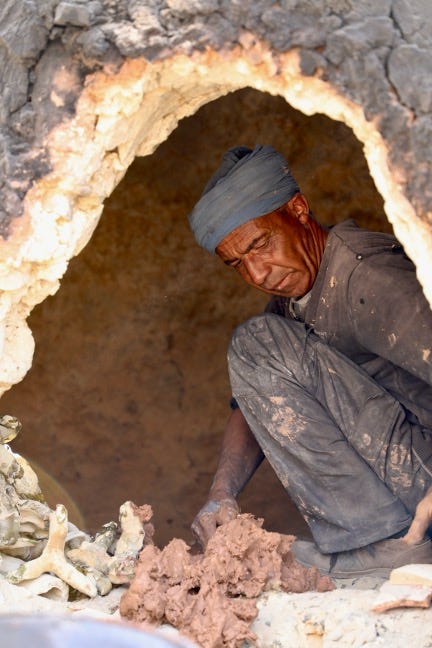
The key question therefore is not how to eliminate suffering, but how to meet it without being destroyed by it. How does suffering take root so deeply within us? Why does distress persist long after danger has passed? Why do certain thoughts and memories return again and again, even when we know they are unhelpful?
If suffering were only a matter of belief or philosophy, insight alone would be enough. But it is not. Even when pain is understood, named, contextualised, and given meaning, suffering often persists.
This persistence is not a moral failure, nor a failure of wisdom. It suggests that suffering is not sustained only by ideas, but by processes - by memory, threat, anticipation, and the body’s own alarm systems.
In Part II of this series of essays, I will turn from meaning to mechanism; from philosophy and lived experience to the anatomy and physiology of distress itself and ask how suffering becomes biologically embedded, why it loops, and why understanding alone so often fails to set us free.
Dear Swaran,
Thank you for sharing the Part 1 of your blog on SUFFERING.
It is very well researched and has many insights.
The following sentence applies to many life situations like Ageing, which I am currently studying/
The key question therefore is not how to eliminate suffering, but how to meet it without being destroyed by it.
I am looking forward to read the Part 2 of the Blog.
Congratulations and thank you.
Perhaps it is getting older, something I seem to be doing with increasing dedication, that makes this piece resonate so much with me. One becomes more conscious of how grief, disappointment, and loss accumulate with time. Are we not, perhaps, like the old man in A River Sutra, drawn to seek refuge on the banks of the Narmada, hoping that distance might offer some respite from suffering? The river holds our pain and suffering within something older, wider and more enduring than our individual life. Perhaps suffering is like this. It cannot always be avoided or transformed into meaning, but it may be held within something larger than itself. Your piece does not deny the depth of suffering and it does not offer easy consolation. Instead, it invites us to see suffering as part of the human "river", carried alongside the currents of love, memory, and faith. Looking forward to part II