

Ezra Pound once wrote a brief poem that captures a dissatisfaction many of us feel but rarely name: the swift passage of time and the sense of loss it leaves behind. As one year gives way to another, it feels like an appropriate moment to pause at the threshold and notice how we move through time at all. All poems included in this blog are freely available at sites such as allpoetry.com and poetryfoundation.org.
And the Days are Not Full Enough - Ezra Pound
And the days are not full enough
And the nights are not full enough
And life slips by like a field mouse
Not shaking the grass.
The poem is neither about speed nor idleness. It points instead to a failure of inhabiting time. Days pass, nights pass, and yet something essential feels missed. Life slips by, without disturbance, without imprint.
What Pound gestures toward is not a problem of time itself, but of our relationship to it. The days are not lacking in duration; they are lacking in presence. This essay is an exploration of a quieter form of time travel. Not moving across time but learning to move more slowly within it.
Time travel
When my son was about ten, he went through a period of intense fascination with aliens, spacecraft and time travel. One morning, while walking our dog, he asked me whether it might be possible for him one day to travel back in time to see dinosaurs. I said it was a difficult question, and I could only share what little I knew. My understanding was that while Newton’s laws did not depend on the arrow of time, the second law of thermodynamics made time irreversible. Heat can only move from hot to cold, not the other way around. I had read that this might make time travel impossible.
We walked on in silence for a while. Then he said, “You’re wrong. Time travel is possible.”
I asked him how.
He replied, “We just travelled forward in time from when I asked the question.”
His answer felt as if we had crossed an invisible threshold from explanation to insight.
When I look at the photographs of my children as babies, I long for even a fraction of a moment when I could revisit the time the photograph was taken, to gaze at their loveliness just a little longer. I feel myself standing on a threshold – aware that I cannot go back, yet unable to stop looking.
Time will not stop.
At secondary school we studied the poem Time you Old Gypsy Man. It imagines time as a wandering presence, forever passing, never settling.
Time, You Old Gypsy Man – Ralph Hodgson
Time, you old gipsy man,
Will you not stay,
Put up your caravan
Just for one day?
All things I’ll give you,
Will you be my guest?
Bells for your jennet,
A flag for your chest,
Why do you steal away,
So unkindly,
All that you can carry
Off from me?
Time, you old gipsy man,
Will you not stay,
Put up your caravan
Just for one day?
We had a marvellous English teacher who allowed our imaginations to flourish. He showed us how the poem captures time as untameable. We bargain with it, plead with it, offer it gifts, yet it continues its way. I thought jennet was a woman companion. He explained that it was a term for a female donkey, a jenny. I was delighted at the image of time accompanied by a small, patient donkey. But I don’t think I understood the poignancy of the poem’s message.
Learning to Love History
For most of my school, I hated history. We jumped from Vedas to Mauryan Empire to Mughal Invasion to British Colonisation to Independence. The vastness of India’s past still eludes me. At that age it felt full of dead people, disconnected, irrelevant. I think I now understand why.
I had no past then.
Or rather, I had no way of seeing myself within a past. History was something that happened to other people. I hadn’t lived long enough to have acquired a history. Now I love it. As I grow older, I can see my own story beginning to take shape. And as my time inevitably moves toward my end, I find myself wanting to know where I began; not only personally, but collectively. I want to trace the story backwards: my family history, my clan history, Sikhs from Kashmir, the story of India, the story of humanity, the emergence of life, and the origins of the cosmos itself.
History became meaningful when I crossed a threshold - when I could locate myself within it. Before then, there wasn’t enough of me to look back upon. I needed a past long enough and distant enough to lend perspective to my recall.
I came late to the recognition that we are not separate from history, but expressions of it.
Candles and the Shape of Time
Which brings me to Cavafy.
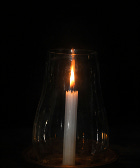
Candles - Constantine Cavafy
The days of the future stand in front of us
Like a line of candles all alight -
Golden and warm and lively little candles.
The days that are past are left behind,
A mournful row of candles that are out;
The nearer ones are still smoking,
Candles cold, and melted, candles bent.
I don’t want to see them; their shapes hurt me,
It hurts me to remember the light of them at first.
I look before me at my lighted candles,
I don’t want to turn around and see with horror
How quickly the dark line is lengthening,
How quickly the candles multiply that have been put out.
Cavafy’s poem offers a powerful visual metaphor. As time moves forward, the line of darkness behind us grows, while the remaining row ahead is getting shorter. We are invited to look steadily at what is already lost, and at what remains. Darkness behind, eventually darkness ahead.
But the candle of NOW is right by me. The present moment where life is happening.
Life is a movement from this now to the next now. We inhabit time, carried along by it, unable to step outside its flow. Time does not stop at each now, but our relationship to it can change. We cannot hold a moment still, but we can enter it more fully. Being attuned to a moment does not extend it in any objective sense, yet it alters how it is lived. The moment becomes richer, denser, more textured.
Sipping coffee in the now
I have started practising this deliberately. Whether it is the dawn chorus or the low, persistent hum of traffic, when I detach my attention from its habitual inner commentary and allow it to rest with what is present, this now feels different. It seems more alive. It hums with sensations that were always there, patiently arriving through the senses, but previously excluded from awareness. Sound acquires layers. Light has temperature. Even stillness reveals movement.
This now too shall pass. I cannot prevent its passage. Nothing I do will slow the clock. But I can resist the habit of inattention; the reflex that lets life slide by while the mind is elsewhere, rehearsing the past or anticipating the future. Life need not pass unnoticed.
When I pay attention in this way, time seems to thicken. It is not that there is more time, but that there is more in the time that is already here. The day feels longer, not because it has been extended, but because it has been inhabited. Perhaps this is self-deception, or an unconscious defence against mortality. Perhaps it is simply the mind rediscovering its capacity to receive experience rather than skim over it. Either way, it works for me.
A cup of coffee, sipped attentively, becomes an example. Not a means to an end, not fuel to be consumed on the way to something else, but a small pilgrimage without destination. The warmth of the cup against the palm. The faint bitterness before sweetness arrives. The aroma rising before the taste. The sound of the cup returning to the saucer. None of this is new. What is new is my availability to it. Attention gathers what was previously dispersed.
In such moments, time does not stop, but it ceases to feel thin. It becomes something one can walk alongside, rather than be dragged through. I can choose to walk with the gypsy and the jenny, rather than let them travel another path whose existence I might never notice. Paying attention does not defeat time. Time will not wait for my attention, nor seek it. My attention simply allows me to meet time, moment by moment anew, while it inevitably passes.
Opening Doors
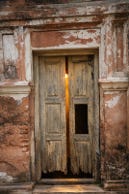
Every time we open a door, we step into something new. A new room, a new setting, a train carriage, a new conversation or a new task. A new now.
Each door is a threshold in time, a moment of transition from one now to another. We can sense both the excitement of the new and continuity of the moment simultaneously. Each open door can become an invitation to a new now, stepping into a new moment.
The Youngest You Will Ever Be
There is a quiet truth that is easy to miss. At each moment, at every now, you are as young as you will ever be.
Instead of worrying about getting old, perhaps we could feel gratitude for continually being our youngest self, right now, in this moment. Time may be moving on, but youth, in this sense, is always available in the present.
For the Anniversary of My Death - W. S. Merwin
Every year without knowing it I have passed the day
When the last fires will wave to me
And the silence will set out
Tireless traveller
Like the beam of a lightless star
Then I will no longer
Find myself in life as in a strange garment
Surprised at the earth
And the love of one woman
And the shamelessness of men
As today writing after three days of rain
Hearing the wren sing and the falling cease
And bowing not knowing to what
The most striking line in the poem is I “bow, not knowing to what.”
I read this poem at each New Year’s midnight. For the previous year, I have passed the date of my death anniversary. My death is certain; its date may well already be written in fate or kismet or karma. Death is the final threshold, certain, unavoidable and unknowable. But this now, at the start of this new year, I can bow in humility before existence itself. The bowing is not subservience. It is an act of gratitude and appreciation of each moment, and of all the nows that I still might inhabit as the gypsy wanders on.
Perhaps this is how we should open doors - not rushing, not distracted, but with an inward bow. A small acknowledgment of the mystery of being here at all. A recognition that each end also carries a beginning.
Every door we open is a threshold, a step into a new now. Perhaps we can step slowly, deliberately, and attentively into 2026.
A very happy new year to you all.
What a beautiful, reflective start to 2026. So many powerful lines.
Thank you, Swaran.
And a very happy new year to you!
Happy and blessed new year to you and the whole family Swaran. For a range of reasons this new year has made me stop and reflect on the light I need to step forward differently. So your article really resonates, thank you Melanie