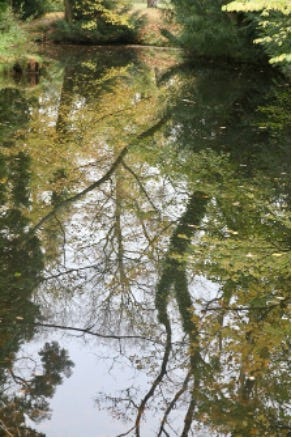
The force that through the green fuse drives the flower
Drives my green age; that blasts the roots of trees
Is my destroyer.
And I am dumb to tell the crooked rose
My youth is bent by the same wintry fever.
(Dylan Thomas)
As a child, I spent my summers at my maternal grandparent’s farm in Jammu, on the banks of the River Tawi, in the foothills of the mighty Himalayas. On rare days when the sky was crystalline and the air so pure it hurt to breathe, one could sometimes see the outline of the majestic Pir Panchal range across which lay the Kashmir Valley. My ancestors were originally from the mountains beyond the Kashmir Valley in the Poonch region, through which runs the Line of Control (LOC) that divides Kashmir between India and Pakistan. My family settled in Indian Kashmir after the 1947 division. During my childhood, much of my clan still lived in Kashmir, only to be exiled again in 1991. My maternal grandfather had settled in Jammu after serving in the British army, so Jammu was more of a home than Kashmir.
Unlike plants, humans can be uprooted. In my family story, roots is a metaphor for a place we can no longer reach.
A small stream ran through the farm, fed by water drawn by a kuhl. It is an ancient mechanical device made from a garland of buckets attached to a metal loop that scoops water from a well as it rotates, driven by a horizontal wheel turned by two bullocks who go round in circles, their eyes partly shaded with leather covers, so they can only see a few steps straight ahead. They were freed from the yoke to feed, rest, and drink water from the stream where my grandmother washed clothes and milked cows. My abiding memory is waking up and running towards my grandmother as she emptied the udders into a clay pot. When I was close enough, she would point an udder at me, rarely failing to hit my open mouth with a spray of warm milk. I never tired of the game, though she, burdened by the sheer weight of the chores ahead, indulged me with only a few squeezes of the swollen udders.
One evening, I remember plucking a flower, a jasmine, I think. It was dusk, and all life was settling down. My grandmother, an uneducated woman who lived entirely by intuition and tradition, gently shushed me: “Don’t, they are sleeping”.
At that time, I viewed her caution as mere superstition, unaware that a brilliant Bengali polymath named JC Bose had already begun to bridge the gap between ancient tradition and modern science. Though I would later learn of his work by rote, the connection between his experiments and my grandmother’s ‘sleeping’ plants was a seed that took years to truly take root. JC Bose (1858-1937) was a brilliant Bengali polymath who was a pioneer in microwave optics, semiconductors, solid-state diode detectors, metal fatigue, and many other scientific advances that were never fully recognised in his lifetime. Bose should be considered the father of what is now called plant neurobiology, as he demonstrated that plants generate electrical signals, integrate information, and show forms of memory and learning, even without neurones or brains. It would be years before science provided a vocabulary for the silence my grandmother respected.
My mother had ‘green fingers’. Everything she nurtured flourished under her care. Uneducated like my grandmother, she instinctively knew what it took me a lifetime to learn: that sentience and awareness are not confined to human beings. She whispered to her plants while tending them.
The language of the cynic
There is a shared animating principle, a life force or spirit, that connects us to the botanical world. For a long time, acknowledging this shared force outside poetry invited ridicule. King Charles has been famously lampooned for years for admitting he speaks to his plants. In our scientific age, where all reality is nothing but matter, such behaviour is viewed by the cynical as naive at best, or foolishly anthropomorphic at worst.
When I speak about such matters with my more hard-nosed logical positivist friends, the most condescending phrase they use is that I am ‘anthropomorphising’. I am projecting human feelings onto unfeeling matter. They would be right if I were projecting my emotions onto inanimate matter. They would also be correct if they thought I was arguing that plants understand human speech. As far as they are concerned, plants grow but do not act. Plants react but do not respond meaningfully. Plants cannot participate in the world teleologically - in a goal-directed manner. Plants may be living, but they are not living beings.
What I think they miss is that sentience may not be a single human-shaped thing. Recent scientific studies suggest that “plant talkers” may be closer to the truth than cynics. Plants are far from passive, inert objects.
The Science of Sentience
There is a measurable goal-directedness in all life. We now know that growing vines do not just flail randomly; time-lapse photography shows that they actively seek support. The Venus flytrap exhibits a form of memory, essentially “counting” the number of times a trigger hair is touched before snapping shut, ensuring that it does not waste energy on a false alarm. Does this mean that a Venus flytrap will ever solve a calculus equation? Of course not. But it does mean that counting is not uniquely human, or there may be ways of ‘counting’ of which we know nothing.
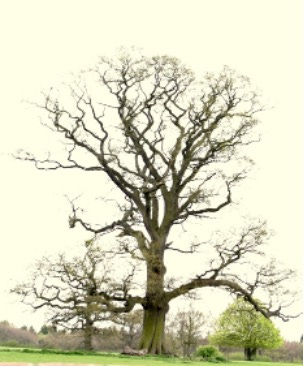
Trees look after each other. They must stay put, unlike my ancestors who had to navigate a Line of Control. Trees are the ultimate citizens of their soil beneath which they build effective communication channels. There is a “wood-wide-web” beneath our feet, a network of mycorrhizal fungi that allow trees to communicate with each other through their root systems, share resources, support weaker kin members, and older “mother trees” nurture younger saplings. Plants under attack by insects can warn neighbouring plants by emitting chemical signals which allow the recipient to secrete a chemical defence.
To me, this appears a goal-directed activity, adaptive in the evolutionary sense, but also with a flexibility that suggests purpose.
My delinquent orchids
Not everyone agrees. A hard-nosed and scientifically rigorous critique from 2023 argued that the claims of a “wood-wide-web” had captured popular fancy and that its assertions were outpacing evidence. It is easy to see how public sentimentality can simplify careful scientific debates where each claim must be rigorously supported.
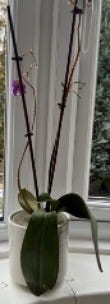
Hence, it is important to make a crucial distinction. Plants may have a ‘plant-like sentience’ of which we are unaware. But they may be able to communicate with each other. That is not proof that they respond to human speech, much less understand it. I look after several orchids. I pay equal attention to all of them, and if I speak to them, it is never to praise one and admonish another. Yet three of them refuse to flower. Unless I attribute personal animosity to three non-flowering ones, I must accept that I am not meeting some biological need in them with my clumsy rearing, rather than my words or tone upsetting them.
If they cannot understand us, why talk to them?
The sacrament of trees
Talking to plants is not about them listening to us. For me, it is a recognition of the common vitality that suffuses us, along with all other living things. It is a tacit acknowledgement of the shared need to grow, thrive, survive, and multiply. Everything that is alive is awe-inspiring, mysterious, miraculous, and humming with aliveness. Mary Oliver captures this sense of reverence gloriously in her poem “When I Am Among the Trees”
When I am among the trees,
especially the willows and the honey locust,
equally the beech, the oaks and the pines,
they give off such hints of gladness.
I would almost say that they save me, and daily.
I am so distant from the hope of myself,
in which I have goodness, and discernment,
and never hurry through the world
but walk slowly, and bow often.
Around me the trees stir in their leaves
and call out, “Stay awhile.”
The light flows from their branches.
And they call again, “It’s simple,” they say,
“and you too have come
into the world to do this, to go easy, to be filled
with light, and to shine”.
Talking to my plants may not make them grow better, as the three orchids on my windowsill prove. But it makes me glad to have them in my life. Whispering to them is my tribute to their aliveness.
If one day, one of the orchids starts talking back to me in a human voice, I will see a psychiatrist. Till then I am willing to communicate with them for my own sake rather than theirs. Their hints of gladness save me too. And daily.