

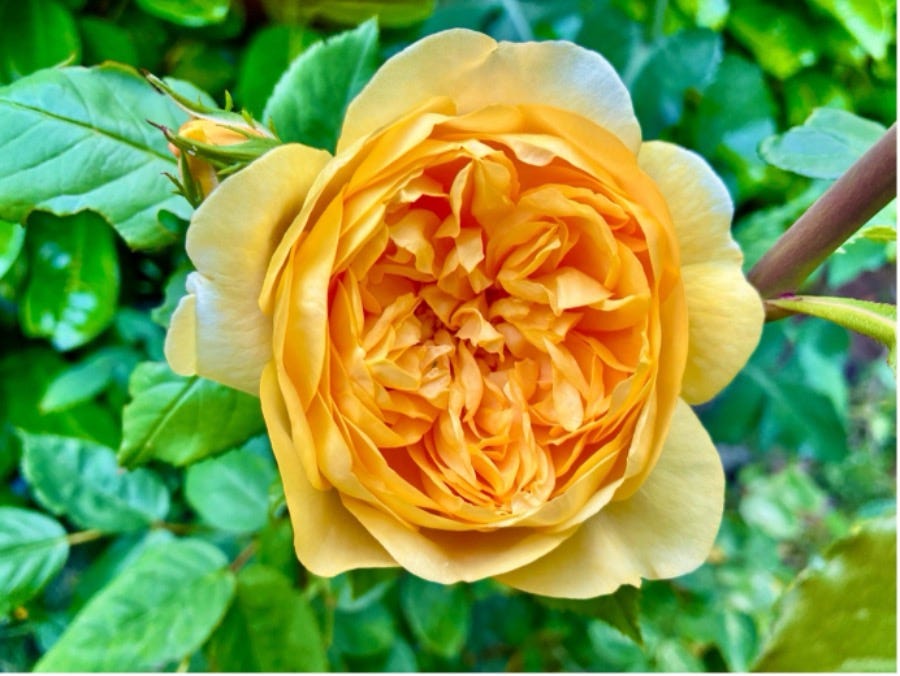
In the previous essay, I wrote about the beauty of flowers, inspired by the arrival of spring and the flowers that followed. I found no answer to why we find flowers beautiful, so I decided that rather than keep pondering, I would simply enjoy the relationship between a flower and me. I concluded that beauty is not a quality of the object alone, nor of the observer alone, but something that arises between them. I also noted that one explanation for our response to natural beauty may lie in evolution: we evolved within nature, not apart from it, and what we call beauty may carry the imprint of that old intimacy. Harmony once conferred fitness; an instinct for the ordered and the proportioned may have helped our ancestors survive.
Everything is more complex than it seems
But there is a deeper layer. One of the reasons flowers are beautiful, like spiders’ webs and nautilus shells and the arrangement of petals in a sunflower, is that they follow a particular mathematical pattern, which recurs persistently across the natural world: the Fibonacci sequence.
I am terrified of maths. I think it is the purest form of human intelligence. My closest friend at school, and the brightest person I know, excelled in maths. We became friends in our early teens over a shared love of P. G. Wodehouse. Maths was just another way of speaking for him. For me it was a formidable territory where my only skill, language, appeared wholly inadequate. He and I have recently made contact. We are both professors now: he at a top university in the USA, me at a “top enough” one in the UK. I remain in awe of his maths prowess.
The numbers in the petals
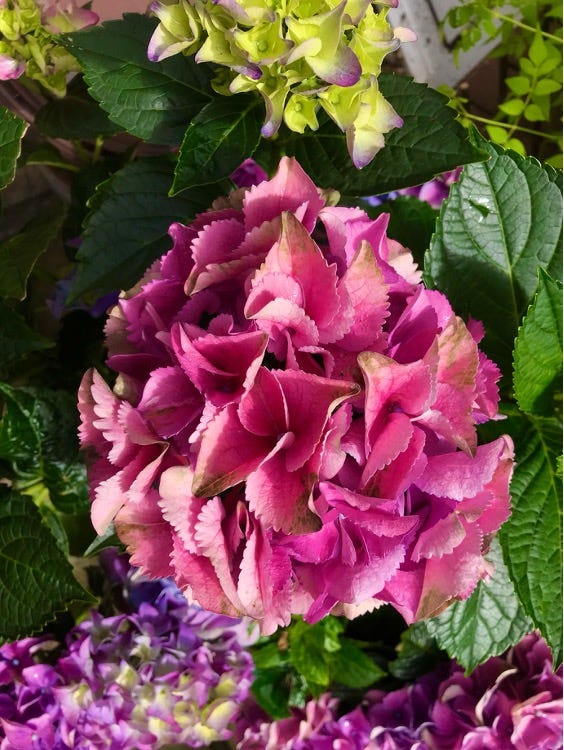
Count the petals of a lily: three. You might think I have got it wrong; you have counted six. But there are three petals (inner) and three sepals (outer), so the number three stands. A buttercup has five. A delphinium has eight. A marigold, thirteen; a common daisy most likely twenty-one, thirty-four, or fifty-five. These numbers- 3, 5, 8, 13, 21, 34, 55- are not random. Each is the sum of the two that precede it. They are the Fibonacci sequence: 1, 1, 2, 3, 5, 8, 13, 21, 34, 55, 89…
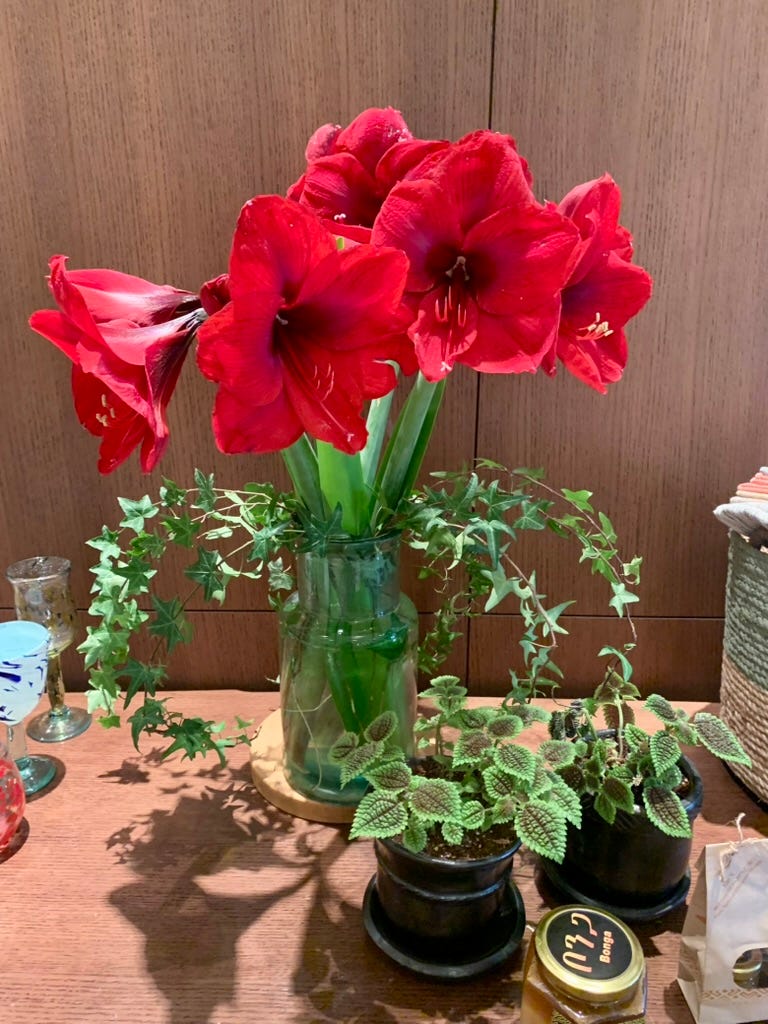
Look at the face of a sunflower and you will see two interlocking sets of spirals, one curving clockwise and one anticlockwise. Count them: almost invariably, the clockwise spirals number 34 and the anticlockwise 55, or 55 and 89 in a larger flower. Both pairs are consecutive Fibonacci numbers. The same principle governs phyllotaxis, the arrangement of leaves around a stem, where each new leaf is positioned at an angle of approximately 137.5 degrees from the one before it - the “golden angle” - ensuring that no leaf directly overshadows the one below it. Evolution seems to have found this optimal packing arrangement by natural selection, and the Fibonacci sequence is its signature.
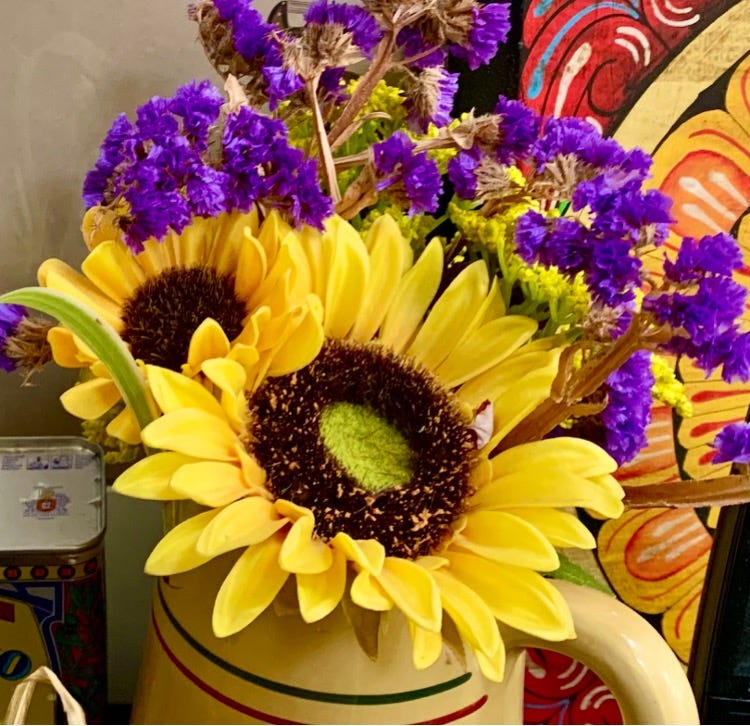
The sequence is also connected to the golden ratio, approximately 1.618 and denoted by the Greek letter φ (phi). As the Fibonacci numbers grow larger, the ratio between consecutive terms approaches φ with ever-increasing precision. The golden ratio appears in the spiral of a nautilus shell, in the proportions of the human body, and has haunted the visual arts and architecture for millennia as an intuition about what makes proportion beautiful.
What mathematicians know about beauty
Mathematicians have long spoken of their subject in aesthetic, almost spiritual terms. I can see beauty easily in geometry, have to try harder with algebra, and only understood the beauty of trigonometry after reading a book about it as an adult. G.H. Hardy, the great British mathematician, wrote: “Beauty is the first test; there is no permanent place in the world for ugly mathematics.” For Hardy, an elegant proof was not merely correct, it was beautiful, in a sense he held directly comparable to the beauty of a poem. Bertrand Russell put it more starkly still: “Mathematics, rightly viewed, possesses not only truth, but supreme beauty.”
Johannes Kepler devoted much of his life to the pursuit of mathematical beauty in the heavens. His Harmonices Mundi (1619) proposed that the orbital speeds of the planets correspond to musical intervals; literally a music of the spheres. His specific musical mappings did not survive scrutiny, but his third law of planetary motion emerged directly from this search for harmonic beauty and remains one of the most important laws in astronomy.
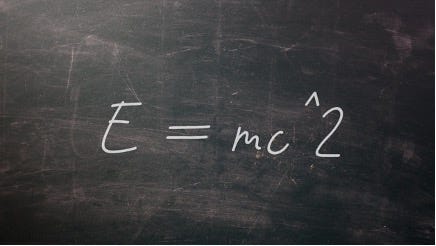
And then there is Srinivasa Ramanujan, perhaps the most extraordinary case of mathematical beauty approaching mystical revelation. Largely self-taught and working in conditions of material poverty, Ramanujan produced results of such depth and strangeness that his collaborator G.H. Hardy placed him among the most gifted mathematicians in history. Ramanujan claimed that many of his theorems came to him in dreams, delivered by the family goddess Namagiri of Namakkal. Whether or not one credits the divine attribution, the results were real, and many of his conjectures remained unproved for decades after his death in 1920. He wrote to Hardy: “An equation for me has no meaning unless it expresses a thought of God.” For Ramanujan, mathematics was not constructed. It was received.
Fibonacci, India, and rasaa - the essence of beauty
The sequence we call Fibonacci’s was known in India more than a millennium before Fibonacci wrote his Liber Abaci in 1202. Piṅgala, a scholar of Sanskrit prosody writing around the 3rd century BCE, developed a combinatorial method for counting the arrangements of long and short syllables in a line of verse, a method that generates exactly this recursion. Later Indian mathematicians, Virahanka, Gopala, and Hemachandra, described the sequence with increasing clarity, the last of them writing some fifty years before Fibonacci himself. A related structure, the Meru Prastara, described by Halāyudha in the 10th century, is what the West would later call Pascal’s Triangle and hidden in its diagonals are the Fibonacci numbers themselves. Mathematics and aesthetics, it seems, were pursuing the same quarry from different directions: counting the rhythms of poetry, and arriving, independently, at the architecture of flowers.
Just as the essence of the flower is in its fragrance, and the essence of fragrance is in its flower,
so the essence of beauty is in its mathematics, and the essence of mathematics is in its beauty.
Bhartrhari, Vākyapadīya (paraphrased)
Invented or discovered?
My exploration of the topic kept raising a question I find genuinely puzzling and cannot resolve: is mathematics invented or discovered? The Platonist view, currently the most widely held among working mathematicians, holds that numbers and mathematical relationships exist independently of human minds, and that mathematicians discover them much as astronomers discover planets. On this view, Ramanujan was not inventing. He was receiving. The formalist view, associated with David Hilbert, holds that mathematics is more like chess: we invent the rules, and only then discover what follows from them. A third, hybrid view holds that we invent the framework (our axioms, our definitions) but that what we find within it is real. We did not choose that the Fibonacci sequence would appear in sunflowers. We merely invented the tools that let us see it.
What strikes me most is the same thing that struck Wigner: that a discipline built entirely on internal elegance and consistency, with no reference to the physical world, turns out to describe that world with astonishing accuracy. If mathematics is invented, why does it keep appearing in nature?
Fractals: the mathematics of infinite detail
There is one more mathematical concept that belongs here, because it connects directly back to flowers.
In 1975, the mathematician Benoît Mandelbrot coined the word “fractal,” from the Latin fractus, broken, to describe geometric forms that exhibit self-similarity at every scale of magnification. A fractal is a structure in which the same pattern repeats, in more or less the same form, however closely you look - not randomness, but pattern, without ever reaching a smooth, featureless surface. Mandelbrot’s original motivating observation, published in a 1967 paper titled “How Long Is the Coast of Britain?”, was that a coastline’s measured length increases without limit as the unit of measurement decreases, because smaller and smaller bays and promontories keep appearing.
But fractals are not only abstract. River networks branch in fractal patterns. So do lightning bolts, snowflakes, blood vessel networks, and the large-scale structure of galaxies. The fern is a celebrated biological example: each frond resembles a small version of the whole plant. And in the garden, Romanesco broccoli, belonging to the same family as the cauliflower produces a head composed of logarithmic spirals, each bud a smaller version of the whole, the entire structure simultaneously Fibonacci and fractal. It is also, unmistakably, beautiful (at the time of writing, all my brassica, including Romanesco broccoli have been chewed by caterpillar; hence no image)
What fractals suggest is that complexity combined with self-similarity at multiple scales may itself be a source of beauty; that the visual richness of flowers may be, in part, a consequence of fractal geometry operating at the level of biological growth. We find the pattern beautiful. The pattern is mathematical. Neither fact fully explains the other.
What we cannot hold
I began these reflections with flowers, and I return to them, but from a very different direction.
Mathematics is abstract and invisible, and yet it is the most precise means we have for describing reality. I cannot follow a proof for more than a few steps before losing my footing. And yet I can recognise, even from the outside, that mathematics has a beauty that operates in the same strange territory as the beauty of flowers: not entirely in the object, not entirely in the perceiver, and resistant to full expression in language.
You can hold a flower without being able to say what makes it beautiful. You can sense that mathematics is beautiful without understanding it. Both kinds of beauty are, in the end, ineffable: they can be pointed to but not fully captured.
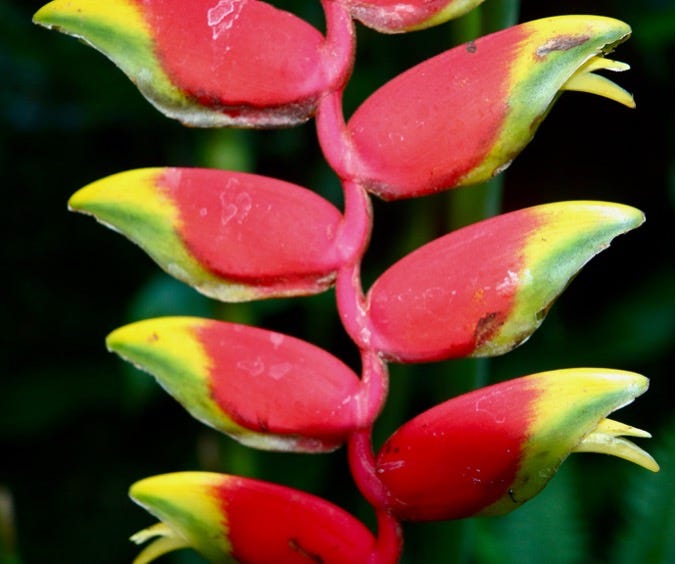
And this brings me to a question I keep pondering: what, finally, is beauty? Mathematics describes it with uncanny accuracy but cannot say what it is. Flowers embody it with breathtaking precision that remains irreducible to its parts. The Vedic tradition, in one of its oldest texts, had the honesty to frame this question without pretending to answer it.
Who truly knows, and who can here declare it,
Whence it was born, and whence comes this creation?
The gods came later than this world’s production.
Who knows, then, whence it first came into being?
He, the first origin of this creation,
Whether he formed it all or did not form it,
Whose eye controls this world in highest heaven,
He verily knows it — or perhaps he knows not.
— Nasadiya Sukta, Rigveda 10.129
Perhaps that is the one thing mathematics and flowers share: both point past what we can fully grasp, and in that reaching, become beautiful.
Wonderful as always
What a beautiful piece of writing!