

All photographs by the author
I was looking for love in the strangest places/ There wasn’t a stone that I left unturned
Uriah Heep, July Morning
The miracle is not to walk on water, but to walk on the green earth
Thich Nhat Hanh
We often search for miracles in the extraordinary: visions, miracles, ruptures in the natural order. Yet the deeper mystery is not whether the laws of nature could occasionally be suspended, but that they exist at all, and that they operate with such elegance and precision in the everyday moments of our lives.

This blog follows the one I wrote about falling. My fall was unintended; my writing is intentional. Yet both remain mysterious. The more I think about how things work, the less certain I become about what understanding means. I have been thinking of who thinks within me, which will form the basis for a series of blogs in the coming weeks.
Meanwhile here’s to wonderment.
Thought before movement
I am typing this sentence while thousands of microscopic events unfold beneath awareness. Sodium ions cross membranes. Proteins change shape. My muscles contract with precise coordination. Somewhere in my brain, networks predict the next word before I consciously recognise it.
Subjectively, I am typing.
Objectively, something astonishing is happening.
We tend to search for miracles in disruption, deviations from the ordinary and everyday occurrences - visions, revelations, moments when nature appears to suspend its rules like walking on waters or raising the dead. Yet the deeper everyday mystery is non-disruptive, and outside our immediate awareness: that the ordinary works at all. That natural laws exist, and that we live inside them with such familiarity that we cease to notice. Familiarity is an anaesthetic. Babies delights in everything, but as they grow, the world becomes a familiar habit. The miracle of the everyday does not vanish; it retreats from visibility.

The Astonishment of a Single Cell
Consider an amoeba, a single-celled organism drifting through water. No brain. No nerves. No consciousness as we ordinarily define it. And yet it maintains itself against entropy. It distinguishes inside from outside. It moves toward nourishment and away from danger. It repairs, adapts, divides. Somehow, it knows how to be alive.
When an amoeba divides, the event appears trivial: one becomes two. If you look under a microscope and pay attention, simplicity dissolves and miracles happen.
DNA replicates with astonishing fidelity. Adenine pairs with thymine; cytosine with guanine. Billions of molecular letters copy themselves with extraordinary precision. Proteins fold into precise shapes without supervision or intention; or at least intention as we understand it. At no point does ‘life’ appear as a discrete ingredient, and yet life unmistakably occurs. We know it when we see death.
The closer we examine living systems, the less mechanical they appear. The distance between an amoeba dividing and a thought arising feels vast, and yet both emerge from processes that we don’t understand.
I am suspicious of the certainties of neuroscientists when it comes to ‘why’ questions about why there is anything, rather than ‘how’ questions which can be mapped onto physics and physiology. I am particularly sceptical of those who say claim consciousness has/can be been explained or that life is nothing but chance and contingency. Not because I know better, but because when you look at the argument of these academics, it is very easy to see its limitations. I do not claim that I have the answer. In fact my assertion is that we will never know. Whether we describe life as design, divine intelligence, creation, emergence, chance, or necessity, explanation eventually reaches a horizon beyond which language becomes tentative. I have come to believe that every living entity has intention, purpose and teleology. But I have no evidence other than an experiential sense. Which is not objective evidence. It makes sense to me. I am not interested in converting a materialist to my view. To each their own!
Yet I realise that I am retreating into belief. Materialism or mysticism? Perhaps both. Strict materialism and strict mysticism arise from the same human need for certainty. Explanations may accumulate but the mystery does not recede.
That which is the subtle essence; in it all that exists has its self.
Chandogya Upanishad
Thought Before Movement
A thought arises. An intention forms. I decide to type the next word. Where did that decision come from?
We can trace influences- from memory, emotion, language, unconscious associations, our cleverness - but the origin itself remains elusive. Thoughts arrive already shaped, already moving.
Thoughts think themselves. -
Meister Eckhart
Neuroscience can map correlates of thought. Imaging reveals distributed activity across prefrontal cortex, association areas, and limbic networks. But correlation is not explanation. Electrical signals do not obviously become meaning, intention, or experience.
Even as I write this, I notice the impulse to explain, as if explanation might finally make the mystery disappear.
But it does not. I have no explanation.
Still, once intention forms, the body responds with astonishing precision. I am still typing.
The Neuroscience of a Keystroke
The decision to press a key does not originate in a single place. Motor cortex participates, but it does not act alone. Premotor regions plan sequences. Basal ganglia help select and inhibit competing movements. The cerebellum refines timing and accuracy.
Pyramidal neurons fire. Action potentials propagate. These are waves of depolarisation as sodium rushes inward and potassium flows outward across the axons of nerve cells. Signals descend along the corticospinal tract, cross in the brainstem, and enter the spinal cord before synapsing onto motor neurons.
Electricity becomes chemistry. Neurotransmitters cross a synaptic cleft only tens of nanometres wide. At the neuromuscular junction, acetylcholine is released. Ion channels open. Muscle fibres depolarise. Inside the muscle, calcium floods the cytoplasm. Actin and myosin slide past one another in microscopic ratcheting motions powered by ATP stored sunlight transformed through countless biological exchanges. Sensory neurons fire back toward the brain. Pressure receptors detect force. Proprioceptors report position. Feedback loops adjust movement in real time.
All of this unfolds in fractions of a second, far faster than conscious awareness. The finger descends. A key is pressed.
Years ago, I learned these mechanisms in physiology lectures. I can describe them process in detail. Yet I cannot experience them consciously. The body knows how to do what the mind only narrates. Knowing physiology of movement does not reduce the wonder; if anything, it intensifies it.
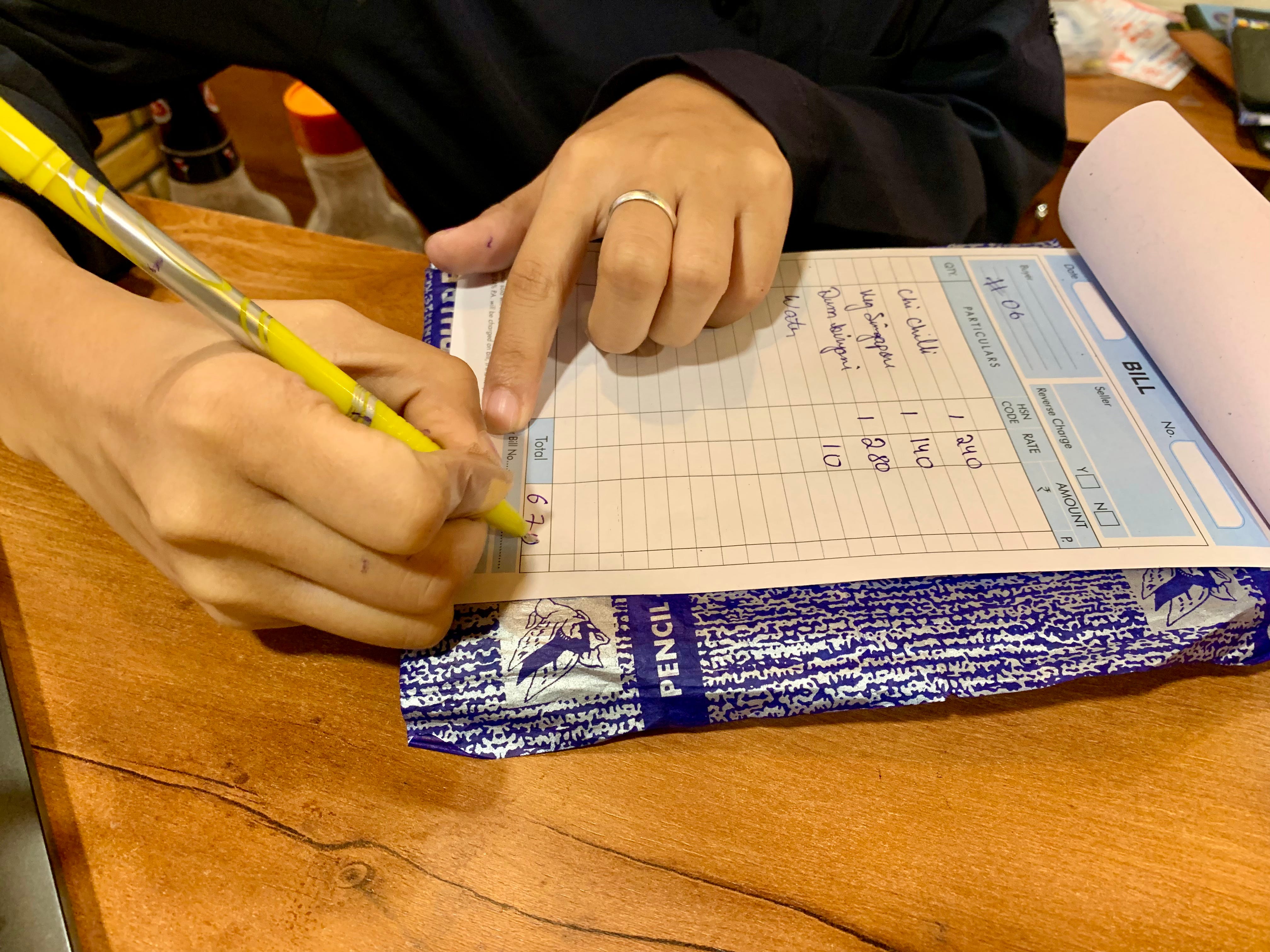
Feedback, Awareness, and the Body Knowing Itself
Even now, as you read this, trillions of signals move silently through you. Heartbeats synchronise with breath. Muscles maintain posture without asking permission. Neural networks predict, correct, and adapt. The body knows itself from within.
Indians would say praana moves through you. The Chinese call it chi. French philosophers once called it elan vitale. The modern secular scientific temperament calls it a random occurrence which appeared simply as a function of a vast universe, the time scale it has existed, and laws of physics which somehow created themselves.
This intelligent, purposeful and goal directed life force is not limited to humans. Leaves convert light into chemical energy with extraordinary efficiency. Spiders spin silk stronger than steel. Ant colonies organise without central command. Trees exchange nutrients and warnings through fungal networks beneath the soil. Life coordinates itself not through a single centre, but through relationships.
As is the microcosm, so is the macrocosm.
Hermetic tradition (also written “as above so below”).
Perhaps what we call sentience is not confined inside brains but is an expression of what appears when matter comes alive.
The Wonder We Forgot
Imagine encountering this world for the first time. Every sensation would astonish. Every movement would feel improbable. Infants inhabit something like this state. Babies are mesmerised by sound, by motion, by the simple fact that a hand moves when they will it to move. Then familiarity settles in. The miraculous becomes mundane. The world becomes habit.
The world will never starve for want of wonders, but only for want of wonder.
G. K. Chesterton
Recovering the Sacred Ordinary
What might change if we could interrupt that habit by paying attention, being present and seeing more clearly? A leaf could be a radiant vision. Feel its texture, examine its veins. Under the microscope, see the stomata. Sunlight turned into food to keep other life forms alive.
From that perspective, a keystroke as mysterious marvel deserving gratitude. A breath as sacred as a sacrament. The Eastern traditions that consider breathe as a divine gift are onto something that science can’t explain, even though we can pinpoint the exact spot at the junction of the brain and spinal cord that controls breathing. Not because these are supernatural, but because they are so thoroughly natural that they exceed our capacity to comprehend them full.
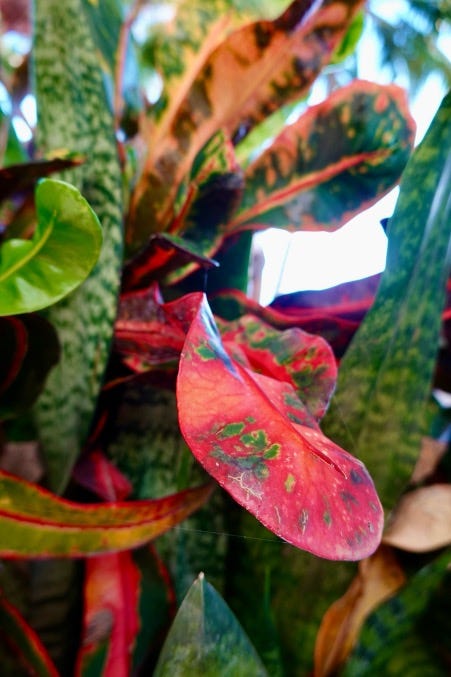
How is not why!
God is nearer to me than I am to myself.
St Augustine
We don’t need natural laws to be disrupted for miracles to reveal to happen. The everyday mundane unfolding life is miraculous enough.
Even now, as you are reading this sentence, your eyes move in small jumps. Tiny muscles adjust without permission. Your brain predicts what comes next before you consciously recognise it. You are participating in processes you cannot see, powered by mechanisms you did not design, sustained by patterns older than thought itself. If it happened if you were not reading, a neurologist would diagnose it as nystagmus and send you for investigations. Ordinary is miraculous, disruption of the ordinary is abnormal.
The miracle of the ordinary and every day is happening now and always.
Perhaps nothing needs to change, except the way we look. Explanation and wonder need not be opposites.Let’s pay attention to both

You’ve managed to make pressing a key seem both miraculous and slightly irresponsible to take for granted. I shall never type casually again. More seriously, you are so right about the mystery and wonder of existence not being hidden but contained within the familiar.