

“The Earth is the Lord’s, and everything in it.” (Psalm 24:1)
“Air is the Guru, Water the Father, and Earth the Great Mother of all.” (Guru Granth Sahib, Sikh Holy Book)
“Pay attention. Be astonished. Tell about it.” (Mary Oliver)
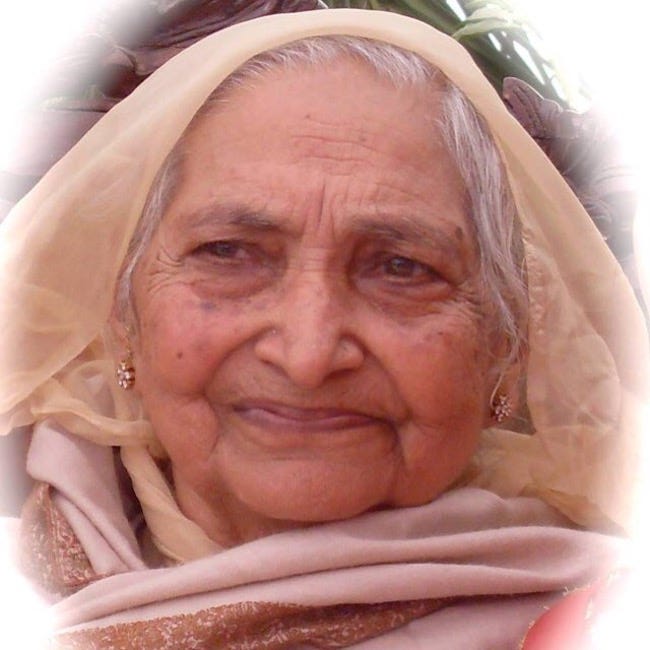
All photographs by the author (except my mother, pic taken by my brother)
Inheritance
Long before I had heard the word sustainability, I was taught about it by a woman who would not waste a grain of rice– my mother.
She woke at 4 a.m. to prepare for my father’s needs before his two-hour daily meditation session. By the time my sibling and I began stirring at 6 a.m., she had already completed hours of invisible work. She ate at the end of the day after feeding everyone else: family members, pets, and anyone who happened to arrive at our door, including stray dogs and cows.
After she died, we sat together and tried to remember her favourite food. None of us could. I am sure she had preferences, but she belonged to a generation shaped by duty more than self-expression–married at thirteen, mother at fifteen, grandmother by thirty-five. She was part of a silent era of women who met cultural obligations without complaint and often without articulating their needs.
I remember two things she truly disliked: spilled salt and leftover rice.
If salt fell, she would warn me that in another life I would have to pick it up with the inside of my eyelid, a vivid enough image to make me careful. If I left rice on my plate, she would say, You do not know how much effort went into producing this. It is a gift from God. Do not waste it.
If food remained, she ate it instead of discarding it or fed it to the birds and stray animals. She cooked only what we needed, except for a few extra chapatis each day for the passing stray cows.
These were not simply habits of thrift. They were gestures of attention, acknowledgements that every grain carries labour, weather, soil, and grace.
The Mountain Economy
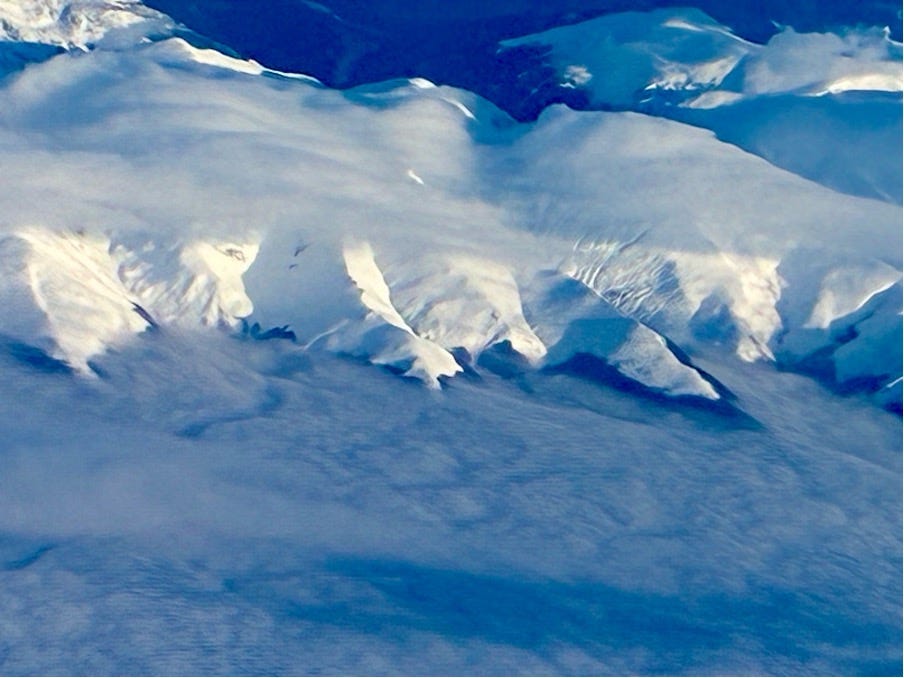
My mother was born in the mountainous region of Bagh, now in Pakistan-administered Kashmir. Life there was harsh and self-sufficient. I have not been to Bagh, but I have visited that part of the region within the Indian borders. The air is cold and thin, almost metallic, in its impact on the lungs. Putting one’s hand in a stream is an ice-cold shock. During holidays in these regions, as children, we would dare to see how long we could keep our hands immersed in the water. Under such elemental conditions, families grew what they consumed and consumed what they grew. Journeys down the mountains were infrequent and purposeful, to obtain what could not be produced locally: salt, sugar, oil, and, occasionally, clothes.
For her, each grain of salt or rice held a value that modern generations might associate with digital wealth, except that its worth was not abstract. It was survival, effort, and gratitude that were made visible.
Scarcity did not induce anxiety. It produced reverence.
Confrontation: Abundance Without Memory
I have everything I need.
I tell my children that we eat better than many kings and queens of the past. Today, we command nature’s bounty outside natural rhythms: strawberries in winter and seasonal vegetables year-round. We send probes to Mars and track human-made objects that leave the solar system.
Yet, each day, we discard what earlier generations would have guarded carefully.
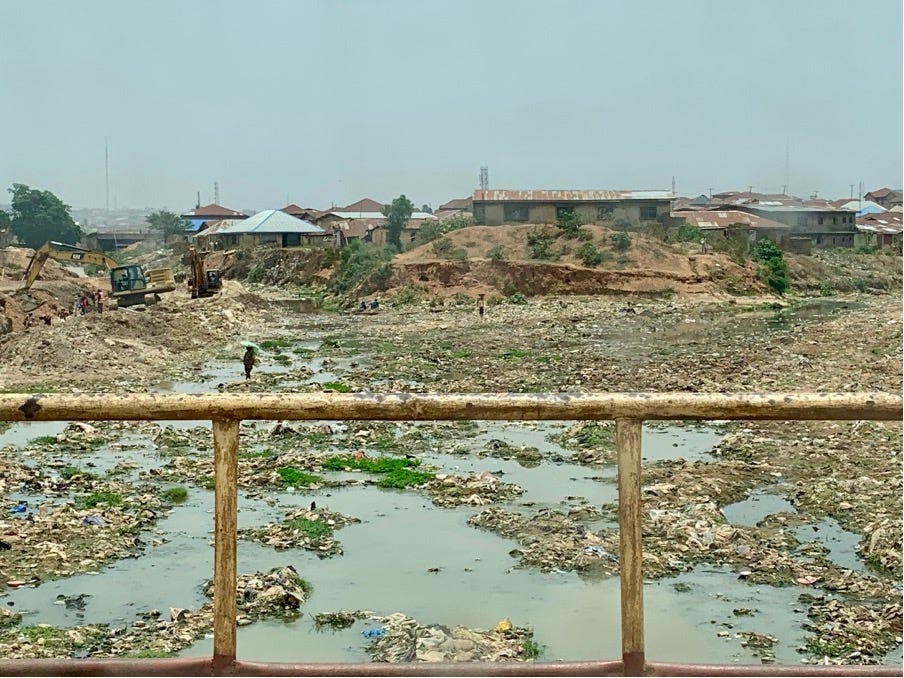
My work in sub-Saharan Africa and South Asia has shown me landscapes where plastic accumulates like geological sediment: in the slums of Nigeria and Dhaka, the gutters of Kolkata and Delhi, and the remote streams of Indonesia and Cambodia. Rivers choke, wildlife suffers, and materials designed for convenience become permanent residents of the ecosystems.
My mother counted grains of rice. Entire economies now count surplus as a problem to be managed. Agricultural systems produce paradoxes: food is destroyed to maintain prices and policies that stabilise prosperity in one region while quietly undermining farmers in another.
Inequality is not a new phenomenon. What is new is the universality of disposability. Even the poorest communities now participate in cycles of buying and discarding.
In many regions, I am warned not to drink tap water, so each day, I buy disposable plastic bottles, which creates a small personal contradiction between safety and sustainability. I am handed bottles of water wherever I go. During my recent trip to Nigeria, I used 5-6 small plastic water bottles every day. I have to perform mental gymnastics. I cannot afford to be ill. During long road trips, there is no access to clean toilet facilities. I could carry my own metal bottle, but it would still have been filled with water from plastic bottles.
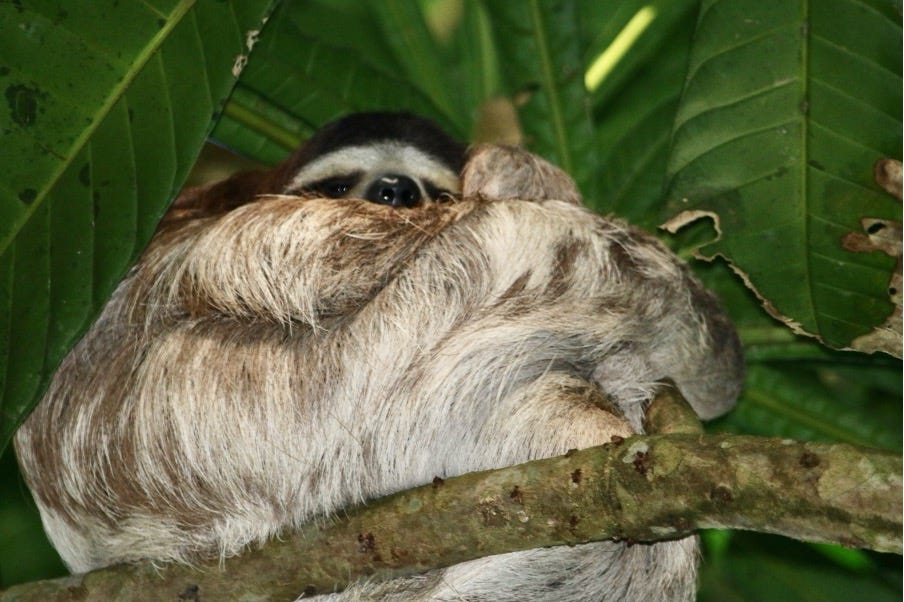
During our family stay at Rancho Margot in Costa Rica, I glimpsed another possibility: an attempt to align production with consumption, producing only what was needed and consuming only what was produced. It felt less like austerity and more like a coherent approach. It remains my family’s favourite holiday experience.
Lessons That Return
As a child, I found many of my father’s habits irritating, especially his insistence on switching off lights in empty rooms. If he found a light left on, he would say, “Ah, the spice box must have an important exam tomorrow. That’s why it needs a light to study.”
We laughed but also felt mildly embarrassed by what we interpreted to be stinginess.
Now, I walk through my own house switching off the lights. I do not make sarcastic remarks, but I secretly hope my children notice. I do not want to sermonise; I hope the lessons arrive quietly, absorbed by osmosis.
Scale and Perspective
The world has become increasingly disposable. Objects, experiences, and sometimes even relationships feel temporary.
And yet, when viewed across deep time, individual human lives have always been brief. Estimates suggest that approximately 110–120 billion humans have lived and died since the emergence of modern humans, while more than 8 billion are alive today, a historically unprecedented population sustained by advances in science and medicine.
These advances have transformed survival. Here is a brief table of what we have achieved in the last two millennia in just one area of human existence, but a profoundly impactful one: the death of a child. Behind these numbers lie humanity’s extraordinary achievement- how many children now grow into adulthood.

I deeply admire human ingenuity. Our ability to alleviate suffering, extend life, and explore the cosmos reflects our extraordinary intelligence and cooperation. As we transitioned from a world where every grain was a gift to one where every object is a commodity, our physical reach expanded to the stars, yet our spiritual attention to what lies right in front of us began to shrink.
But mastery without restraint risks becoming excess.
Integration: Learning to Tread Lightly
We human beings rule supreme on this planet. All the more reason to rule wisely.
We do not need everything we buy. I do not need any more clothes for the rest of my life. Yet, I still throw away disposable pens, even as I try to return to a fountain pen.
We need to tread lightly on this earth. Not as an act of deprivation, but as an act of attention.
We need to leave memories of love and laughter rather than landfills filled with impulse purchases. To fill lives with meaning rather than fill spaces with things.
I wish I had learned this sooner. Perhaps wisdom arrives only with age or with the slow accumulation of contradictions that force us to reconsider what matters. Maturity cannot come prematurely.
I do not expect everyone to arrive at this realisation at the same time. I only hope that some may arrive sooner than I.
“The Earth is the Lord’s, and everything in it.” (Psalm 24:1)
“Air is the Guru, Water the Father, and Earth the Great Mother of all.” (Guru Granth Sahib, Sikh Holy Book)
“Pay attention. Be astonished. Tell about it.” (Mary Oliver)
I see the resemblance!
Loved some lines. Scarcity does not induce anxiety, it brings about reverence.
Mastery without restraint risks becoming excess.
I am a minimalist in every way and enjoy every moment of being this way. My heart cries out in anguish witnessing the nonsensical wasteful traits of human mankind.