

Give thanks in all circumstances
— 1 Thessalonians 5:18
In a recent conversation with a Brazilian colleague, she mentioned that in Portuguese, the term for thank you is obrigado, literally “obliged”, implying indebtedness or a social obligation. She preferred the Spanish gracias, which is rooted in gratitude. I mentioned that the Hindi word is dhanyawaad, the Punjabi version dhanwaad, or the Urdu shukriya, which is related to the Arabic shukran. I did not know the etymology of the Hindi word offhand, but I said that I would find out. This small exchange led to this piece.
Why do we say thank you? Is it an acknowledgement, obligation, gratitude, politeness, humility, or something else entirely? The more I looked into it, the more I found that these two small words carry a remarkable amount of human history.
Linguistic Landscape: What Different Languages Literally Say
The exploration was illuminating. The English thank you comes from the Old English þancian, “to think, to remember with gratitude.” The French merci implies reward or favour but is rooted in the concept of mercy. The German danke is linked to denken, thinking, and gratitude expressed through mindful recognition.
The Hindi dhanyawaad, to my genuine surprise, literally means blessed speech. The Urdu word shukriya, which I grew up hearing, derives from shukr, meaning gratitude, thanks, or praise. It has the same root as the Arabic shukran.
Mandarin Chinese uses xièxiè, which emphasises reciprocal social harmony. I found Japanese arigatō to be the most striking of all. Historically, it arose from words meaning “rare or difficult to exist”, expressing it is an acknowledgement that something precious or unlikely has occurred. It is a beautiful way of saying thanks.
Many Indigenous languages encode relational reciprocity rather than individual indebtedness, with expressions that mean something closer to “I recognise your gift” or “we are connected through this act.” One could go on. Even these few examples make the point: every language’s word for thank you is a small window into what that culture values most.
A Sikh Voice: The Deepest Thank You
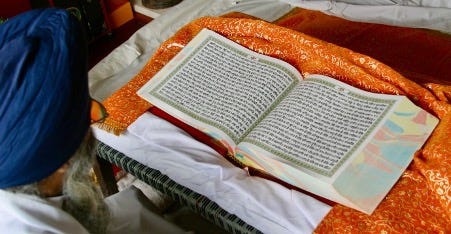
The Guru Granth Sahib offers what may be the most extraordinary expression of gratitude in any religious text. This shabad by Guru Arjan Dev Ji, the fifth Guru, is said to be the verse he recited while being tortured to death by the Mughal Emperor Jahangir in 1606. Not a protest. Not a cry for mercy. A thank you.
ਤੇਰਾ ਕੀਆ ਮੀਠਾ ਲਾਗੈ
ਹਰਿ ਨਾਮੁ ਪਦਾਰਥੁ ਨਾਨਕੁ ਮਾਂਗੈ
Tera keeyaa meethaa laagai.
Har Naam padaarath Naanak maangai.
“Whatever You do, O Lord, feels sweet to me.
Nanak asks only for the treasure of Your Name.”
Guru Arjan Dev Ji, Raag Aasaa, Guru Granth Sahib, p. 394
This is gratitude under conditions that would break most of us down. It is not politeness, social lubricant, or even comfort. It is far harder to achieve a thank you that does not depend on things going well.
What Emotions Does “Thank You” Carry?
Once you start thinking about the possible reasons for saying thank you, the range of emotional registers the phrase covers is surprisingly wide. Gratitude and appreciation are the most obvious and perhaps the most common forms of prosocial behaviour. However, mutual recognition and reciprocity play an important part, as does the simple function of social lubrication, courtesy, and the oil of everyday interaction.
Thank you can acknowledge a power asymmetry, signal humility, mark the formal closure of an interaction, or be no more than a ritual compliance. In this way, “thank you” is less a specific emotion and more a relational signal, a way of marking that something has passed between people and that it was noticed.
One Phrase, Many Contexts
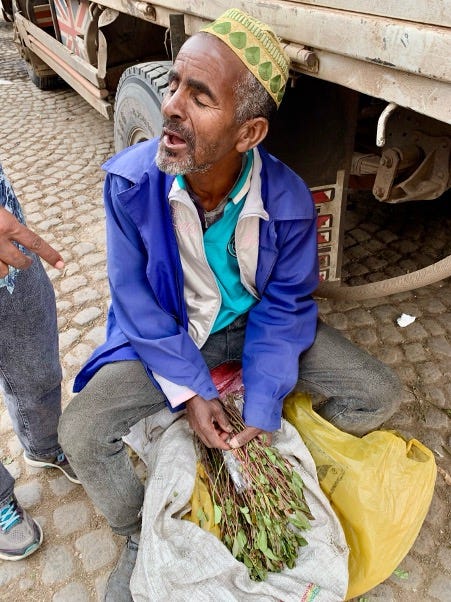
We say “thank you” in radically different situations. We thank the surgeon who saved a life, a stranger who gives way at a junction, a barista handing us a coffee, and God in prayers and hymns across every religion. How can the same two words span existential salvation, minor courtesy, economic transaction, and spiritual awe?
I think the answer is that the words are a vessel. Their meaning is poured in by context, relationship, and the sincerity, or absence of it, that the speaker brings to the conversation.
Historical Origins: Early Expressions of Thanks

Care involves behaving in a manner that meets the needs of others. It is widespread in the animal kingdom. Compassion involves recognising another’s distress and working to alleviate it, as seen in many social mammals. However, gratitude is the most cognitively demanding of the three. It requires memory of a specific act, attribution of intent, and an inclination to respond similarly.
In that sense - care is I will look after you. Compassion is, I feel your pain. Gratitude is, I remember what you did for me, and now I am with you. That is thank you as a past act that binds future relationships.
There is a famous anecdote, often attributed to Margaret Mead, that is possibly apocryphal. A student asked her what she considered to be the first sign of human civilisation. She reportedly said, a healed femur. In the wild, a broken thigh bone is a death sentence for animals. A healed person means that someone else kept that person alive, fed, protected, and cared for them through months of helplessness. Whether Mead ever said these words matters less than the truth they point to.
Neanderthal skeletons have been found with healed injuries that would otherwise have been fatal. Similar evidence of social protection exists in gorillas, chimpanzees, bonobos, elephants, wolves and dolphins. Survival has always been a social phenomenon. Thank you, in whatever wordless form it first took, must be nearly as old as we are.
I Thank You God

During my childhood, my father placed small plaques around the house with the phrase ਵਾਹੇਗੁਰੁ ਤੇਰਾ ਸ਼ੁਕਰ ਹੈ (O Lord, I am grateful to Thee). He wanted us to experience gratitude as a permanent state. I was anything but grateful at that time. Where was the toy I wanted? Why would he not buy me a bike? Then there were the hand-me-downs from my brother, eleven years my senior, which meant I was perpetually misaligned with whatever my peers were wearing. They had flares. I had drainpipes. There was a lot of anger in those years and very little gratitude.
Much older now, and no longer able to apologise to my father for my thoughtlessness, I find comfort in trying to be what he was trying to make me. One of my favourite poems by e.e. cummings, easily available on the net, captures the kind of reverent gratitude he was pointing toward that sees existence itself as a gift:
i thank You God for most this amazing
day: for the leaping greenly spirits of trees
and a blue true dream of sky; and for everything
which is natural which is infinite which is yes
(i who have died am alive again today,
and this is the sun’s birthday; this is the birth
day of life and of love and wings: and of the gay
great happening illimitably earth)
how should tasting touching hearing seeing
breathing any—lifted from the no
of all nothing—human merely being
doubt unimaginable You?
(now the ears of my ears awake and
now the eyes of my eyes are opened)
What moves me most in this poem is the final image, the ears of the ears waking, the eyes of the eyes opening. A second layer of perception. Gratitude is not just a feeling but a way of seeing, of being more fully present to the fact that you exist at all.
Two Words, Vastly Insufficient
Now that the ears of my ears are awake, or at least more awake than they were as a boy who only saw the drainpipes, I understand how “thank you” is both indispensable and utterly insufficient. Its power lies in this compression: a vast range of human emotions squeezed into two syllables.
Obligation. Politeness. Recognition. Reciprocity. Spiritual surrender. The words do not distinguish between them. Context does, and so does the person who says them.
When thank you is truly felt, when it arises not from courtesy or social habit but from the recognition that something was given that did not have to be, it becomes something wonderfully, specifically human. A declaration, as much as courtesy. A statement that we notice, remember, and that the bond between us has been renewed.
My father was aware of this through his spiritual wisdom. He knew it before I was ready to hear it.
All photographs by the author