

All photographs by the author
“Only when the last tree has been cut down, the last river poisoned, and the last fish caught, will we realize that we cannot eat money” (saying attributed to Cree Native Americans)
The river remembers
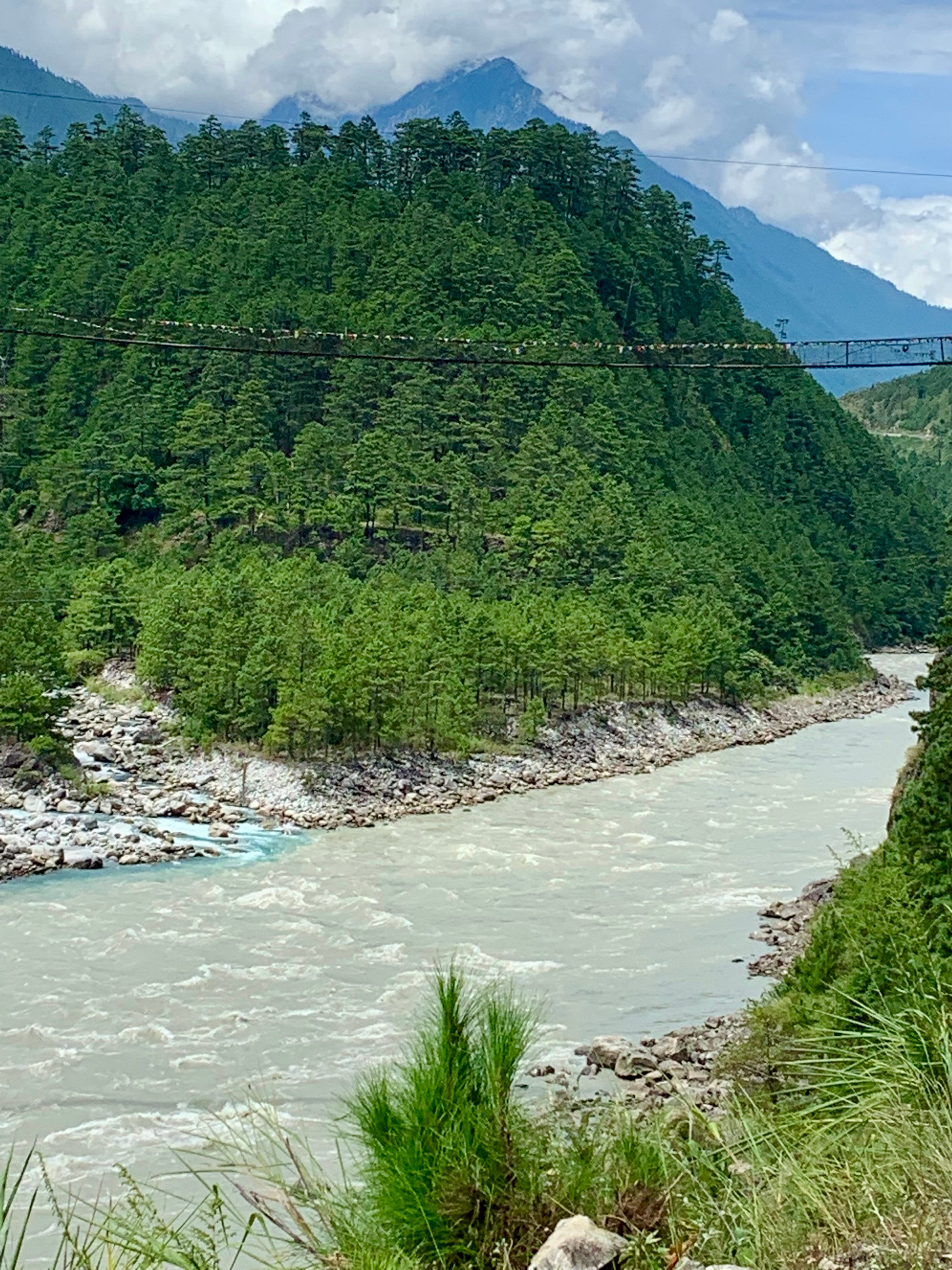
Often watching the Extinction Rebellion and other climate protests in London and elsewhere, I am reminded not of carbon targets and slogans, but of a river in Karnataka.
In April 2019, I decided to go fishing on the Kabini River in Nagarhole National Park, Karnataka. The rest of my family were elsewhere occupied- reading, scrolling the internet, or Snapchatting. Ajaya, a local fisherman, was my guide and boatman. We set off with a rod and line, a mixture of bait (offal, dough, corn, and worms), and some cold beers to try our luck.
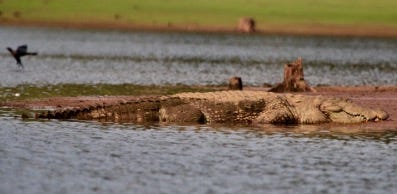
The Kabini River, also known as Kapila, meanders between Kerala and Karnataka, a region rich in biodiversity. One of the few places in the world where you might see the rare Black Panther or the Melanistic Leopard, also known as the ‘ghost of the forest’. It is home to a number of endangered and rare species, such as the Indian leopard, Gaur (Indian Bison), mugger or marsh crocodile, sloth bear, pangolins, and the Indian Rock Python. There are large populations of sambhar, cheetal (spotted) and barking deer, monkeys, elephants, striped hyenas, wild boars, Ussuri dhole, mongooses, civets, Indian flying giant squirrels, porcupines, slender loris, and jungle and leopard cats.
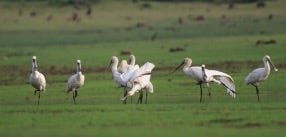
There are over 250 species of birds, with threatened species including the white Ibis, darters, and red-headed vulture, and endemic species such as the blue-winged parakeet, Malabar Grey Hornbill, Malabar Lark, Malabar Tragon, and the white-bellied Treepie, perhaps the most beautiful bird of the crow family. Flocks of spoonbills frolic on the riverside. Spread over 55 acres, this part of the forest used to be a royal lodge, a venue for Maharajas and Viceroys to indulge in their hunting passions.
The riches of rivers
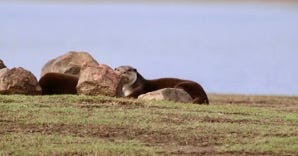
Kabini once teemed with life. Here, you can find the giant humpbacked Mahseer, which can grow up to 1.5 meters in length and is considered one of the 20 megafish in the world. The red-tipped halfbeak, mrigal, Waynad Mahseer, Kohri, Nilgiri, Bhavani, and Cauvery barbs,ande Nilgiri Mystu, were all once endemicton the rive, and now face extinction. The giant Mahseer population has declined by 90% in recent years. The fish Nemacheilus pulchellus lives in these waters and is so rare that it does not have a common name. In June 2016, scientists from the Kerala University of Fisheries and Ocean Studies discovered a previously unidentified species of fish with a blue iridescence along its dorsal and ventral fins in a secluded stream draining into the Kabini River. DNA analyses confirmed that it is part of the Badis family and was named Dario neela (neela is blue in many Indian languages). Smooth-coated otters feast on the river’s many fish and invertebrates, but like the fish, the otters are also under threat.
The earth is my mother, and I am her son (Atharva Veda, Bhumi Sukta)
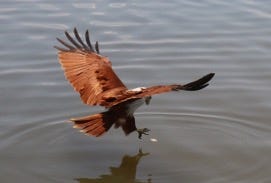
I threw bait into the river. The sky was dotted with Brahmani kites (also known as the red-backed eagle), a magnificent raptor that also scavenges, beautiful in its chestnut-red plumage and sharply contrasting white head and chest. One was particularly adventurous and fearless. As soon as I cast the line, it would swoop majestically on the bait, often catching it in midair. I tried to throw some bait on the other side, away from my cast, but the less intrepid kites covered that area. I feared the kite swallowing the hook or tearing its talons on it, and having been defeated by its persistence and accuracy, I decided to drop the line just by the side of the boat rather than casting it far.
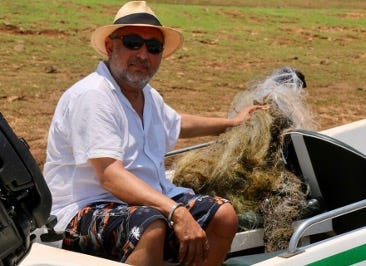
The hook was stuck in something hard. Much tugging revealed remnants of a plastic net. As I pulled in the net, more of it was revealed until I ended up hauling several meters of netting, tangled with deadwood, weeds, and human detritus. Ajaya informed me that every evening, fishermen lined the riverbed with these nets and removed them at dawn, along with the trapped fish. Each day, a large amount of netting was left in the river by the fishermen. He said that the net also often caught juvenile fish, and everyone realised that the fish stock was dwindling. But what option did he have? He barely made a living and had to look after a family of six, including his elderly mother and a newborn baby. When I expressed my horror, he did the Indian head wiggle; equal parts agreement, obsequiousness, and a shrug of helplessness.
The earth is the Lord’s and everything in it (Psalm 24:1)
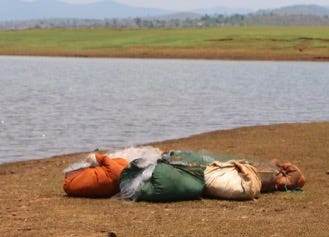
I decided to remove as much plastic netting as possible that afternoon. It was hard and pitiless work in hot and humid conditions. After approximately three hours, the boat was full, and we decided to take the netting on shore. As we reached the riverbank, fishermen were bringing in sacksful of nets for that night’s fishing. I offered Ajaya some extra money to dispose of the netting we had collected. He wiggled his head and thanked me in response.
The geography of anger
As Extinction Rebellion blocks traffic in London and other big cities, I understand what drives them. I sense their need to do good, to feel good, to do the right thing, and to feel righteous. I felt virtuous after three hours of fishing for plastic. It may not have made any difference; Ajaya may have tipped the plastic back into the river. However, it made me feel good momentarily.
Extinction Rebellion is driven by the same need. I do not doubt their sincerity; I doubt the geography of their anger.
I am unsure what blocking traffic in London achieves. We in Britain can reduce our use of plastic. Our beaches are also littered with plastic. We can stop exporting our filth to other nations. However, our contribution, both good and bad, is meager. I cannot imagine Extinction Rebellion protesting outside the Indian High Commission in London. It does not fit into their image of the ‘baddies’. Meanwhile, Ajaya is trying to survive. He is aware of the damage done to the source of his livelihood. However, he can plan only until the next few meals and, at best, the next few months. Carbon or plastic reduction targets set at the International Summit in exotic locations are as meaningless to him as his life is to the London protestors. Ajaya knows that the river is dying, and that hunger does not wait for environmental recovery.
Blaming or solving?
I wish I had an answer. The answer for Ajaya and his fishing community, for fired-up protesters at Extinction Rebellion, for those of us who worry about the state of the planet. My children want to save the planet; I want them to clean their rooms and study hard. I think the discipline of tidying is better than anarchic protests. Studying science and engineering may offer them greater opportunities to do good than waving placards with meaningless platitudes.
Or perhaps I too am part of the problem, wanting order, discipline, and solutions while living inside the very structures that unmake the natural world. I can only remind myself of the saying attributed to another Native American, Chief Seattle: “Man did not weave the web of life; he is merely a strand in it”.
To move beyond the momentary feeling of virtue, we must bridge the gap between global awareness and the Kabini’s local reality. By channelling human wisdom and ingenuity into targeted, site-specific solutions, we can empower communities like Ajaya’s to protect their environment without sacrificing their survival and well-being.
Real change requires that we move past mere protests and displays of anger, far away from the source of the damage. Instead, we must offer tangible support and scientific innovation directly to those living on the front lines of ecological collapse, ensuring that the “web of life” remains unbroken for all.
An earlier version of this essay first appeared on kitaab.org. Reproduced with permission
Thank you Prerna. Individual effort provide some confort against the overwhelming scale of the problem. We need wise and thoughtful leadership, seemingly in short supply right now. But one lives in hope.
Swaran you have powerfully brought out the grim reality of the dwindling Kabani river and the plastic pollution endangering marine life,animals and birds. Your sensitive capture of the diverse species makes the loss feel real and urgent besides adding colour to the piece.It is painful how poverty and at times obsequious inaction allow such degradation to continue unchecked.Yet through your lens and words you awaken awareness and responsibility-much needed call before this beauty is lost forever.