

Flower in the crannied wall, I pluck you out of the crannies, I hold you here, root and all, in my hand, Little flower
but if I could understand What you are, root and all, and all in all, I should know what God and man is.
Alfred Lord Tennyson
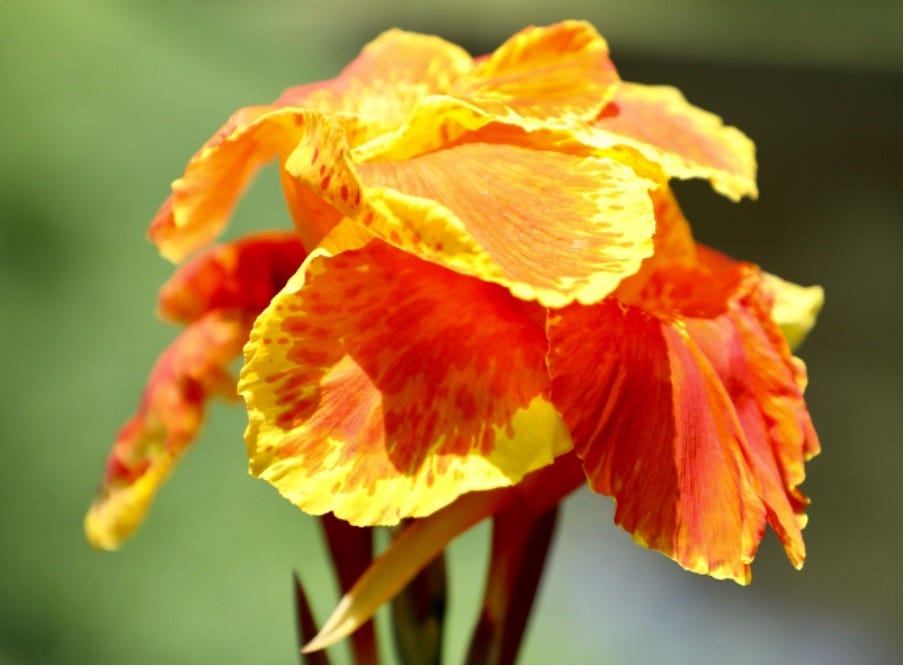
Spring has arrived in Britain with an unusual spell of hot, unbroken sunshine, and my garden has been transformed almost overnight. What was until recently a verdant monochrome has burst into a dazzling array of colour. It started with daffodils, bold and unapologetic in their yellow, followed by bluebells and forget-me-nots, shyer and less ostentatious. The daffodils disappeared quickly; their beauty is inseparable from their ephemerality (more on daffodils here); the bluebells followed, but some forget-me-nots still linger.
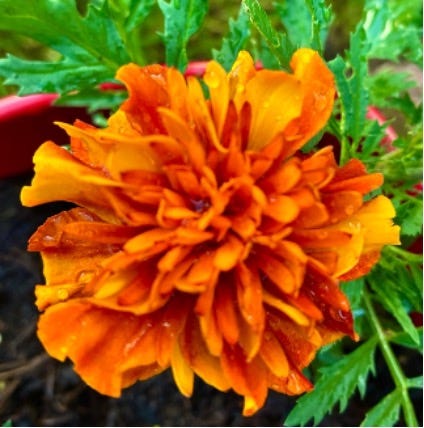
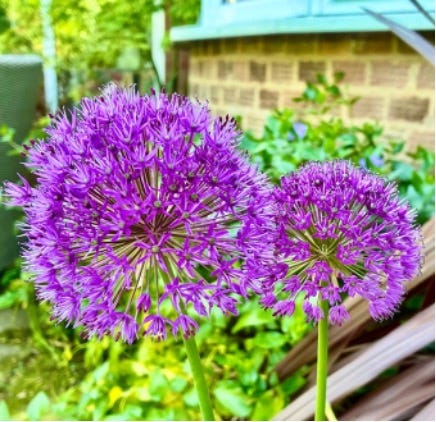
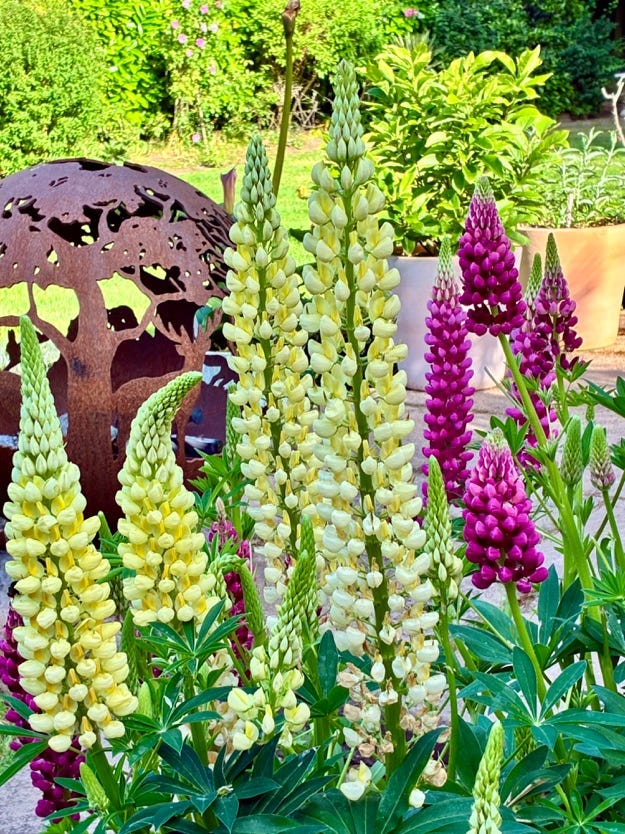
Within two weeks, my garden contains an abundance of lupins in spirals of purples, pinks, yellows, and whites; marigolds in bold orange and yellows, with a French variety a blazing orange, yellow, and red that reminds me of Saharan sunsets; and heavily perfumed roses beginning their long summer of profusion. The agapanthus is coming up, the alliums have set up their architectural globes, and an unusual pale cream hellebore grows quietly, often inseparable from its leaves. There are foxgloves, cosmos, lavender, peonies, and others; some names I can recite, but whose individual personalities I am still learning.
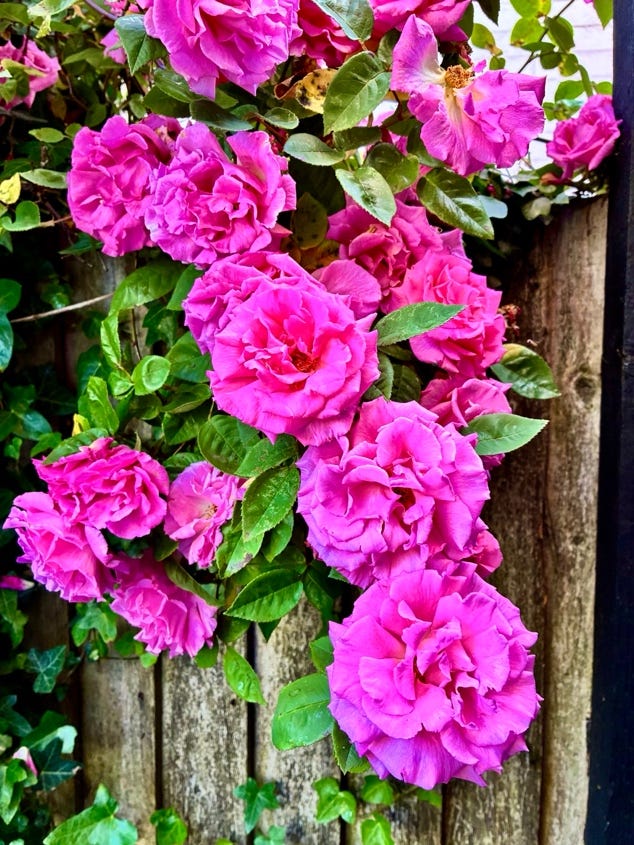
I select flowers mainly for two reasons: as cut flowers to bring inside and to attract as many pollinators as possible. Each flower has a unique shape, colour, and aroma. Each shares the same fundamental architecture, yet each arrives at a combination so distinct that no two species seem to have agreed on the same solution if they were trying to solve an evolutionary problem.
The Architecture of a Flower
Every flower is amazing in its precision. For this essay, I had to re-read my school-level botany, for I had forgotten the names of many structures. The petals, collectively the corolla, are coloured banners that catch the light and the eye. Below them, the sepals form a protective casing of the bud and cradle the base of the open flower. At the heart, the stamens carry their anthers, which are small, powdery, often golden, and on slender filaments; these are the male structures, the pollen-bearers. At the very centre, the pistil, comprising the stigma, style, and ovary, receives and processes what the stamens offer. The entire structure is built around a single biological imperative: reproduction. Flowers are unashamedly sexual.
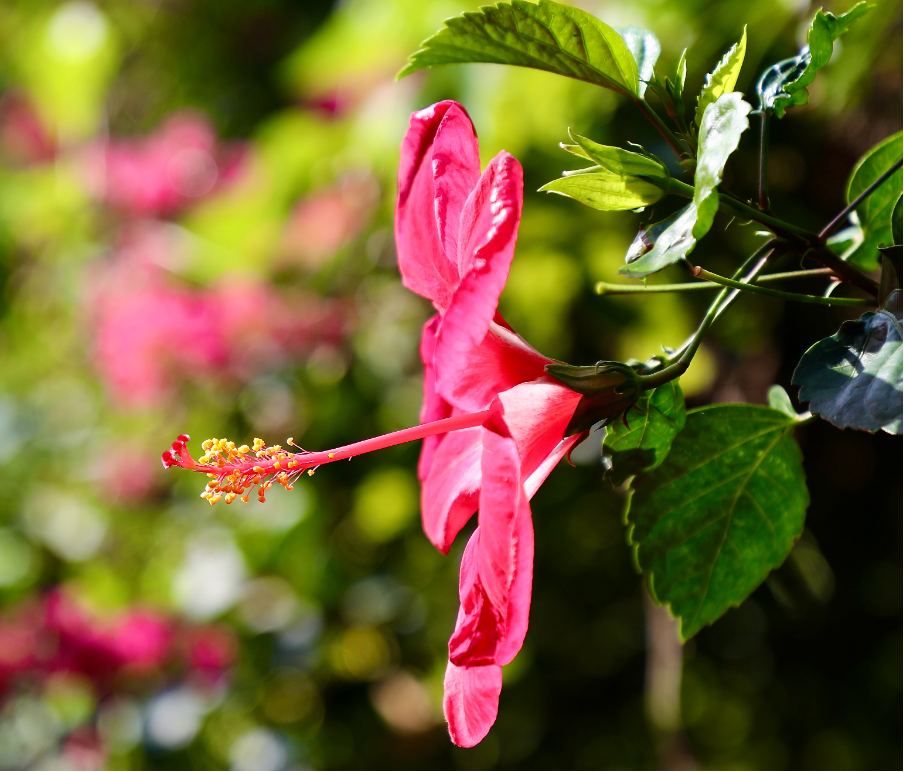
I can look at a single flower or its individual structures for a long time. Fascinated but unsure of what I am fascinated by. The more carefully I look, the more I notice. Petals change colour in a slow gradation, the stamens are arranged geometrically, and the scent deepens as the light fades. Why is there such a variety and beauty in flowers? There is far too much to notice, but who is the intended ‘noticer’?
The Pollinator and the Flower
The standard evolutionary answer to this variety begins with pollinators. Flowers are beautiful, the evolutionary expert will say, because what is considered beauty is an evolutionary mechanism to attract pollinators. Colour, shape, scent, and ultraviolet patterns invisible to us but blazing to a bee attract insects, birds, and bats that carry pollen from plant to plant.
The common pollinators that visit a British garden tell part of this story: bumblebees of several species (each with different tongue lengths, suited to different flower depths), honeybees, solitary bees such as mason bees and leafcutter bees, hoverflies that mimic bees, red admiral and peacock butterflies, and some butterflies and moths that work night shifts on flowers whose white petals catch the moonlight. Beetles contribute, and even ladybirds, perfect assassins, who should be called 007–licenced to kill. Then, there is my annual adversary, the cabbage butterfly, which ruins my brassicas year after year with a reliability I regard as personal animosity (my eternal enemy). I cannot bring myself to kill the larvae, for their sheer beauty and ruthless efficiency in chewing cauliflower within days that has taken me at least two months to grow. There must be a karmic debt that I owe to the cabbage butterfly.
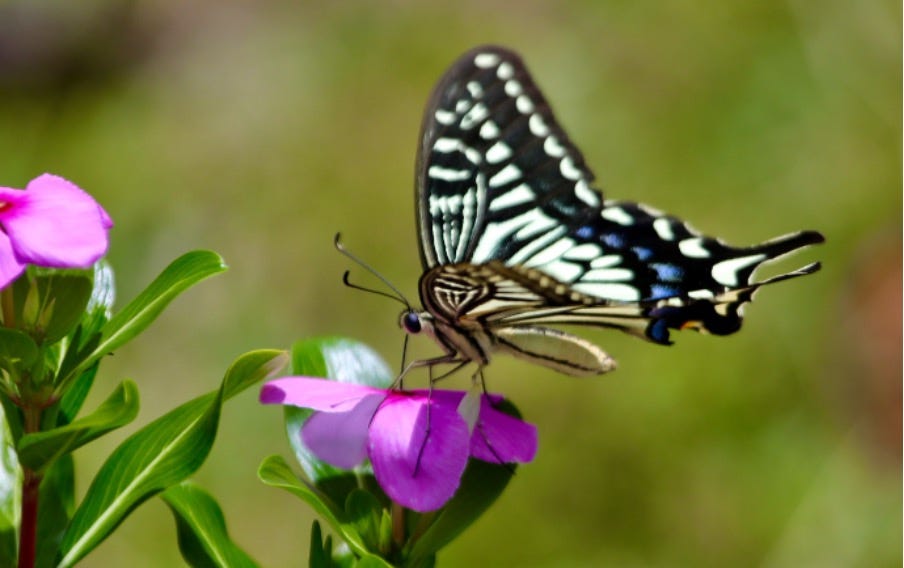
The evolutionary logic is persuasive at one level. But I am not convinced. One sunny afternoon, I followed a single bumblebee visiting flowers of wildly different shapes, sizes, colours, and scents. If the sole purpose of a flower’s beauty is to attract a specific pollinator, one would expect convergence; each plant would settle on the optimal design for its target visitor. Instead, there is an extravagant proliferation of forms for pollinators. It is a buyer’s market; the sellers have put their best wares on display. It is plausible that different flowers specialise in attracting pollinators at different times of the day or season or in different microclimatic conditions. However, I have not been able to find an account that satisfactorily explains the sheer exuberance of variety on purely functional grounds.
There is a deeper problem. Evolutionary fitness may explain why flowers attract bees. It does not explain why I personally find flowers beautiful. I do not watch flower porn, and their sex life holds little interest for me. Even if I wanted to, my clumsy fingers could not manage the delicate task that a bee’s tongue accomplishes.
I can think of another evolutionary argument for this. The more beautiful a flower, the more likely humans are to cultivate and propagate it, conferring a kind of fitness advantage conferred by our preference. However, this fails immediately. Flowers blossomed in forests before any human being had ever ventured into them. Beauty existed before humans witnessed it. So, who witnesses beauty in a human-devoid wilderness?
Is Beauty Inherent in Nature?
A forest that no human has ever entered is still full of beauty. If beauty were simply a human projection, a quality we impose on the world for personally satisfying reasons, then an unwitnessed forest would be devoid of beauty. But this feels wrong. The flowers bloom in their thousands on hillsides that no one has ever seen. In my youth, I recklessly ventured into the mountains and wilderness in India, where I would not permit my son to go. I was captivated everywhere I went.
Glory be to God for dappled things
For skies of couple-colour as a brinded cow;
For rose-moles all in stipple upon trout that swim.
Gerard Manley Hopkins, Pied Beauty
Diversity can be easily explained from an evolutionary perspective. Each plant finds its niche, as the argument goes, and solves its individual (species) problem in its own way. But why should the solution to a biological problem consistently produce something that strikes me as beautiful? Beauty is either an inherent quality of the natural world or human beings have evolved in such an intimate relationship with nature that we are tuned, at a very deep level, to resonate with it. Perhaps both are true. Nature is saturated with dappled things.
Earlier ideas about beauty
The ancient Greeks considered beauty from a philosophical standpoint. For Plato, beauty is one of the three supreme forms, alongside Truth and Goodness. In the Symposium, the philosopher Diotima instructs Socrates that the lover of beauty begins with a single beautiful body, then recognises beauty in all bodies, then ascends to the beauty of souls, of knowledge, until finally perceiving Beauty itself - absolute, pure, unmixed with the mortal or the transient. If one accepts this argument, flowers are simply rungs on a ladder leading upward. Their beauty is real, but only an exemplar of something far more fundamental.
For Aristotle, beauty consisted of order (taxis), symmetry (symmetria), and definiteness (horismenon)–a correctly proportioned arrangement of parts. Flowers have order, symmetry, and a definite form that distinguishes one species from every other. The Stoics went further, finding in the beauty of nature evidence of divine reason (logos) running through all things, giving form and purpose to what would otherwise be chaos.
Greek philosophers assumed a fundamental link between beauty (kalos) and goodness (agathos). The compound ideal is expressed as kalos kagathos (καλὸς κἀγαθός), the beautiful and good, which is also used to describe the noble and virtuous. For Greek philosophers, beauty was not merely a decoration; it also had a moral dimension. To perceive beauty was to be drawn toward the Good. Among humans, physical beauty, in both men and women, is considered a sign of moral excellence. The ugly were base or ignoble. On this account, a flower was not merely pleasant; it possessed virtue. The Greek term for this is that a flower has arate (ἀρετή), which is best translated as excellence. For human beings, living a life of arête is the mandatory prerequisite for achieving eudaimonia, a state of human flourishing, deep fulfilment, and a well-lived life. If one agrees with this description, a flower is symbolic of a life well-lived.
Beauty in the Indian Tradition
Indian thought, both philosophical and literary, has been unusually attentive to beauty in nature, particularly in flowers. In the Bhagavad Gita, Krishna tells Arjuna:
patraṁ puṣpaṁ phalaṁ toyaṁ yo me bhaktyā prayacchati tad ahaṁ bhakty-upahṛtam aśnāmi prayatātmanaḥ
If one offers Me with love and devotion a leaf, a flower, a fruit, or water, I will accept it. Bhagavad Gita 9.26
In this context, a flower is not merely a decorative offering. It is a vehicle of devotion and a point of contact between the human and the divine. Its beauty is what makes it a worthy gift. Flowers have been used in sacred ceremonies worldwide. I will expand on this in another essay in this series.
In the Buddhist tradition, the Flower Sermon is even more specific and detailed. The Buddha assembled his disciples, held up a single flower, and said nothing. Only Mahakasyapa understood and smiled. The deepest truths, the story suggests, cannot be expressed in language but can be pointed to by a flower held in silence.
Sanskrit literature, particularly Kalidasa’s poetry, describes flowers with an unmatched sensuality. In his Meghaduta (The Cloud Messenger) and Abhijnanasakuntalam (The Recognition of Shakuntla), specific flowers are evoked as both natural objects and emotional registers.
Indian aesthetics also developed the concept of rasa, the “flavour” or essential emotional quality that arises in the experience of art or nature. Beauty is neither in the object alone nor in the perceiver alone, but in the relationship between them; it is the quality that arises when a perceiving being of a certain kind meets an object fitted to call forth a response. More of this ahead.
The same stream of life that runs through my veins night and day runs through the world and dances in rhythmic measures.
Rabindranath Tagore, Gitanjali
Can Beauty Be Measured?
At some point, I am overtaken by the academic habit of prioritising measurement as a quantity over quality. We are taught that only things that can be measured matter. Everything else is linguistic sophistry. If beauty is real is an empirical fact, it should be measurable. Is it a quantity?
There is, in fact, a unit of beauty: it is funny but illuminating. If Helen of Troy had a face that launched a thousand ships, then one helen is the unit of beauty sufficient to launch one thousand ships, and a millihelen, one thousandth of a Helen, is the beauty required to launch a single ship. The unit has been attributed to various wits, and it is both charming and witty because it captures the essence of the problem. But flowers do not launch ships. The millihelen fails at its first hurdle. I have not yet used it.
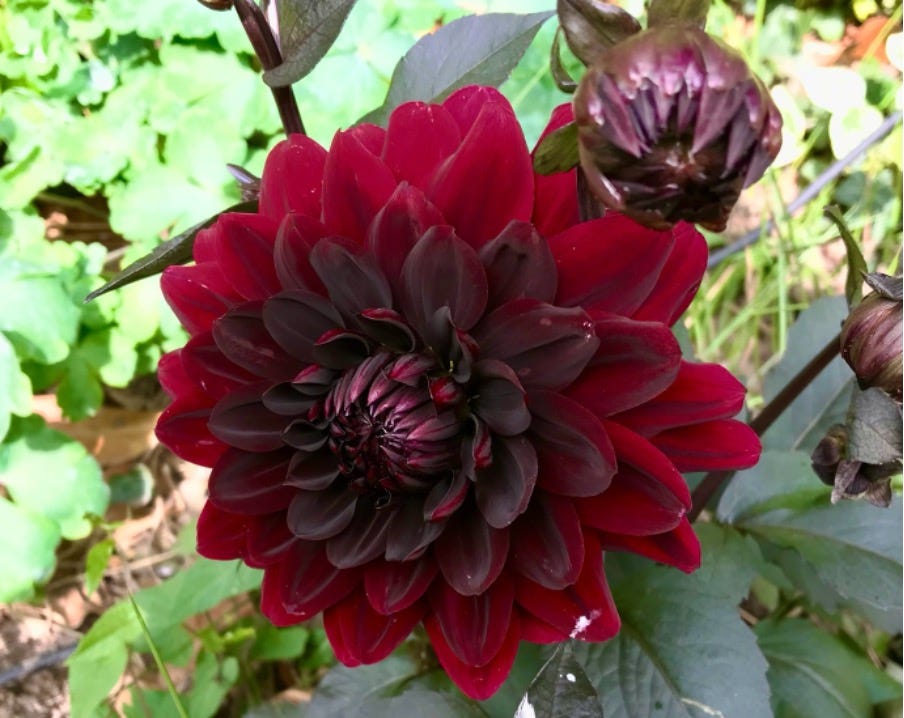
A deeper problem with quantifying beauty is that it requires a common standard of comparison, a shared aesthetic receptor, a universal measure. Beauty does seem to have some universality: flowers are considered beautiful by virtually all human cultures in all recorded history on all inhabited continents. But the degree of beauty, the particular quality of beauty, and above all the meaning of beauty, all resist reduction to a number. The field of empirical aesthetics attempts to measure pupil dilation, heart rate, and galvanic skin response to beautiful stimuli. The numbers are real. But they never capture what it is like to stand before a rose in full bloom on a June morning. The correlates of an experience tell us nothing about the experience itself. Threin lies the failure of billions of pounds invested in brain states that have failed to illuminate the mind.
A Relational Quality
I therefore assume that Beauty is a quality. You may not agree. But stay with me. If it is a quality, where does it reside?
Surely, not in the flower. And not simply in me. The flower was beautiful before I walked into the garden and will be beautiful after I go inside. My cat and dog show no particular interest in flowers either. I keep lilies out of the reach of the cat and ensure that I wash my hands after touching anything in the garden, knowing the leg-cocking habits of my cocky dog.
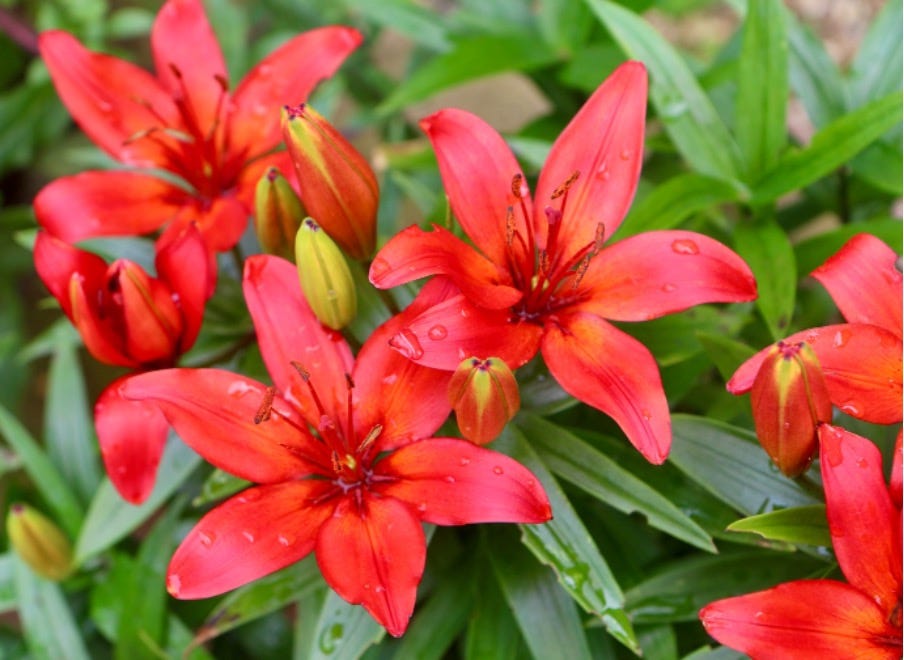
Beauty might reside in the relationship- in the meeting between a perceiving being of a certain kind and a world of a certain kind. This is close to the Indian rasa theory: beauty arises when the capacity for aesthetic experience meets an object that is fitted to call it forth. Advaita (non-dual) Indian tradition divides consciousness into a Triouti (threefold nature of perception). A drishta (seer) observes the drishya (the seen) using drishti, which is the organ of visual perception. A bee navigates by ultraviolet patterns that we cannot see; a dog reads the garden through scent maps beyond our imagining. What I find beautiful in a flower may be entirely invisible to them, and what they find rewarding in the same flower may be invisible to me.
Immanuel Kant called aesthetic judgements “subjective universals” in that they feel immediate and personal, arising from deep inside one’s own experience, and yet we make them with a confidence that others will agree. “This rose is beautiful” does not feel like “I happen to prefer this rose.” It feels like a report on the world. And yet it cannot be demonstrated to anyone who does not see it.
The Experience as Its Own Justification
I find that I have already spent several hours trying to formulate these thoughts. I am exhausted, but the stubborn academic refuses to be defeated by problems. I must find an answer. Meanwhile, I am missing the beauty of my garden. At a certain point, analysis becomes a labyrinth that leads away from the garden rather than deeper into it. Every explanation, however elegant, leaves a residue of mystery. There was a moment I had this morning, standing with my coffee in the sunshine, looking at the lupins, when the question simply dropped away. Not answered. Dissolved. I looked at them with awe, wonder, and gladness.
I watched a bee hover from one lupin to another. Each lupin petal resembled a human hand folded in anjali, a reverent Indian hand position (mudra). The bee entered the space between the thumb and palm. The flower appeared to invite the bee inside.
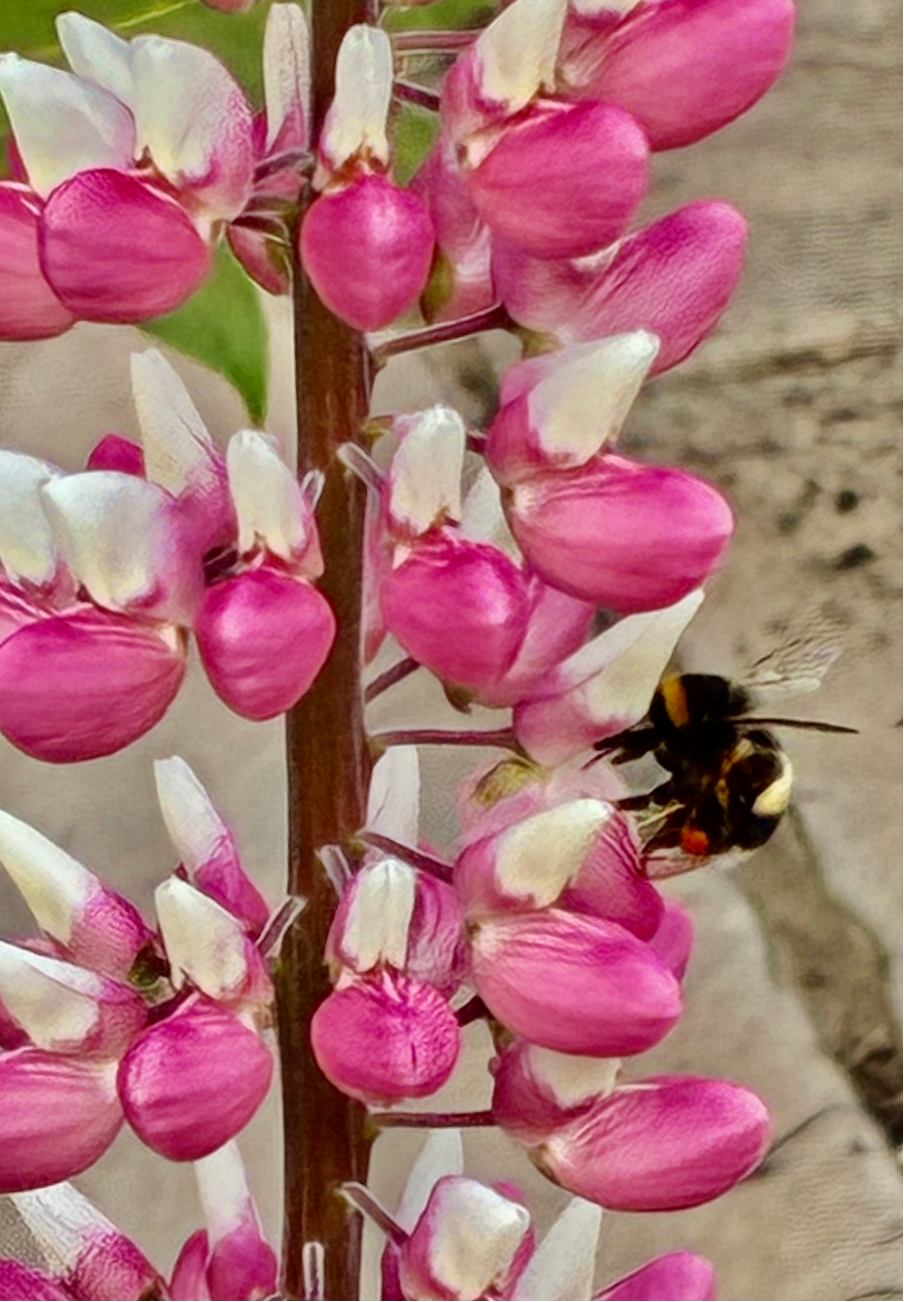
And that was enough. The experience was an end in and of itself. That flower, that light, that warmth on my face, that gladness in my heart, on that particular morning felt complete. It did not need an explanation.
Not everything needs to be questioned. Not everything requires an answer. Sometimes, being is sufficient.
Perhaps the wisest response to beauty is not to explain it, but to receive it.
The earth laughs in flowers. Ralph Waldo Emerson
This is what is called penetrating the depths and breadths of fundamental phenomenal experience of this wonderful life and being.
Sat Chit Ananda!!
This is a beautiful!. I especially loved how you move from the simple pleasure of looking at flowers to much deeper questions about beauty, nature, and meaning.