

All pics by the author
Heyaṃ duḥkham anāgatam (The suffering that has not yet come is to be avoided. Patañjali, Yoga Sūtra II.16)

In an earlier essay I argued that pain is unavoidable and that suffering, though not optional, is shaped by the meaning we give it. I ended with a question philosophy on its own cannot answer: if meaning matters so much, why does insight fail so often? Every psychiatrist has met the person who understands perfectly why they are frightened, who can name the event, place it in context, even forgive the one responsible, and who still wakes at four in the morning with a racing heart and a dry mouth. Understanding lives in one part of the brain. Suffering seems to live in another.
This essay turns from meaning to mechanism: to the circuits that detect threat, the memory systems that store and rewrite it, the predictive brain that suffers in advance, and the loops that keep trauma alive long after the event has passed.
A word of caution. Mechanism is not cause, and it is certainly not experience. Knowing that dopamine is involved in psychosis does not tell us why a particular young man fell ill in a particular year; knowing which circuits fire in grief does not tell us what grief is like.
Commenting on Patañjali, Vyāsa observes that past suffering is spent, present suffering is already being lived; and only the suffering yet to come can be prevented. Much of what we suffer now is the future, experienced in advance.
The sentinel: threat circuitry
Mātrā-sparśās tu kaunteya śītoṣṇa-sukha-duḥkha-dāḥ / Āgamāpāyino ‘nityās tāṁs titikṣasva bhārata
(The touch of the senses brings cold and heat, pleasure and pain; they come and they go, they do not last. Bear them patiently, O Bhārata. Bhagavad Gītā II.14)
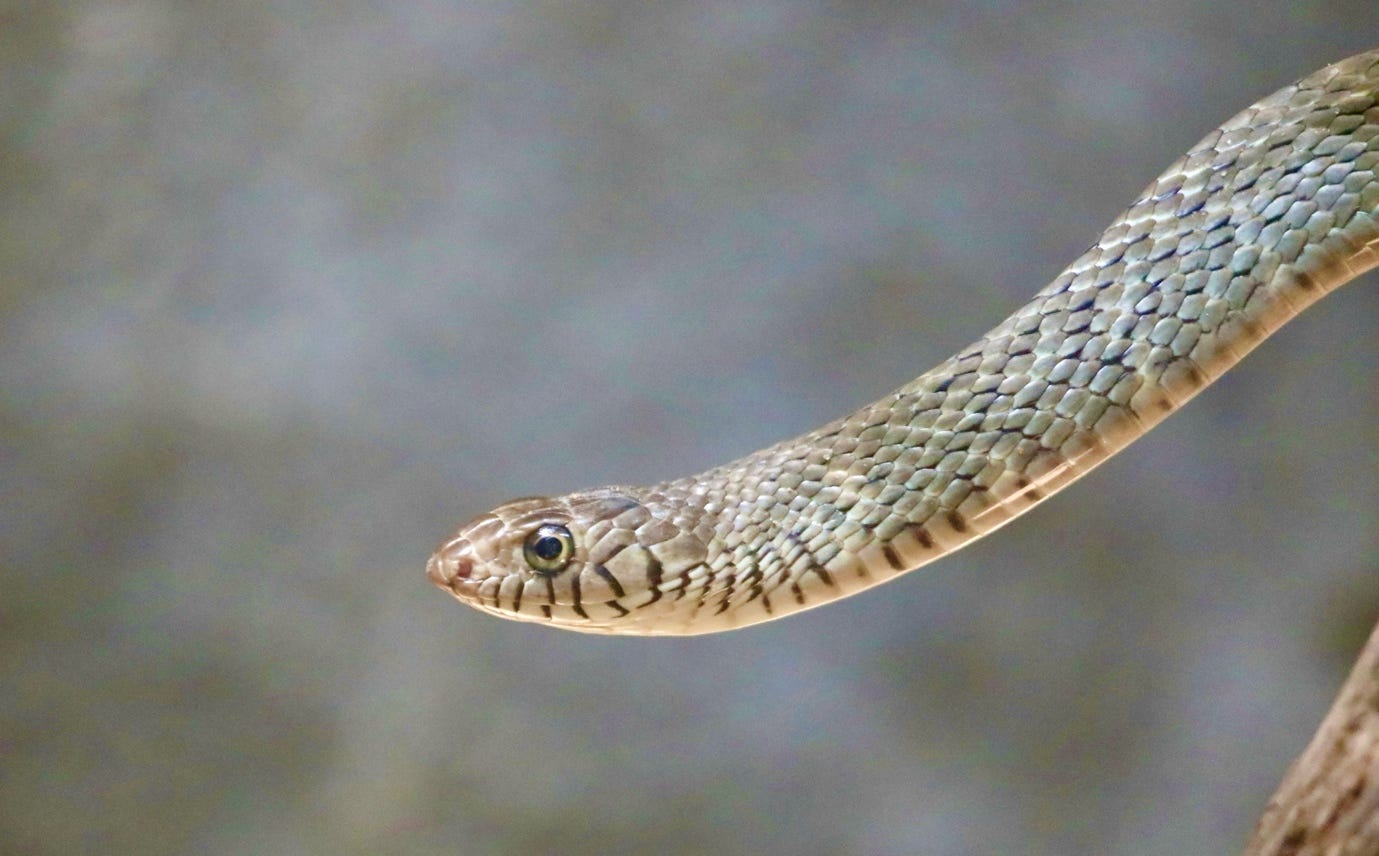
Advaita Vedanta has a favourite illustration of illusion. A man walking at dusk sees a snake on the path and leaps back, heart pounding. Looking again, he sees a coil of rope. Adi Shankaracharya, the foremost teacher of Advaita (non-duality), used rajju-sarpa, the rope mistaken for a snake, to show how the mind superimposes a false reality on a true one. Without knowing it, he was describing the biology of the threat system.
Deep in each temporal lobe sits a cluster of nuclei the size and shape of an almond, which is what amygdalameans in Greek. Sensory information reaches it by two routes. The ‘low road’ from the thalamus is fast and crude, arriving in about a dozen milliseconds, long before the visual cortex has worked out what it is looking at. The ‘high road’ through the cortex is slower but more accurate. The low road sees a snake. The high road, a fraction of a second later, sees a rope. By then the body has already jumped.
For an animal in the wild, mistaking a rope for a snake costs a life. Evolution has built a sentinel that prefers false alarms to missed ones. Once alerted, the amygdala recruits the hypothalamus and brainstem: noradrenaline floods the system, the heart quickens, breathing becomes shallow, blood moves from gut to muscle, and the adrenal glands release cortisol to sustain the response. All this happens before a single conscious thought.
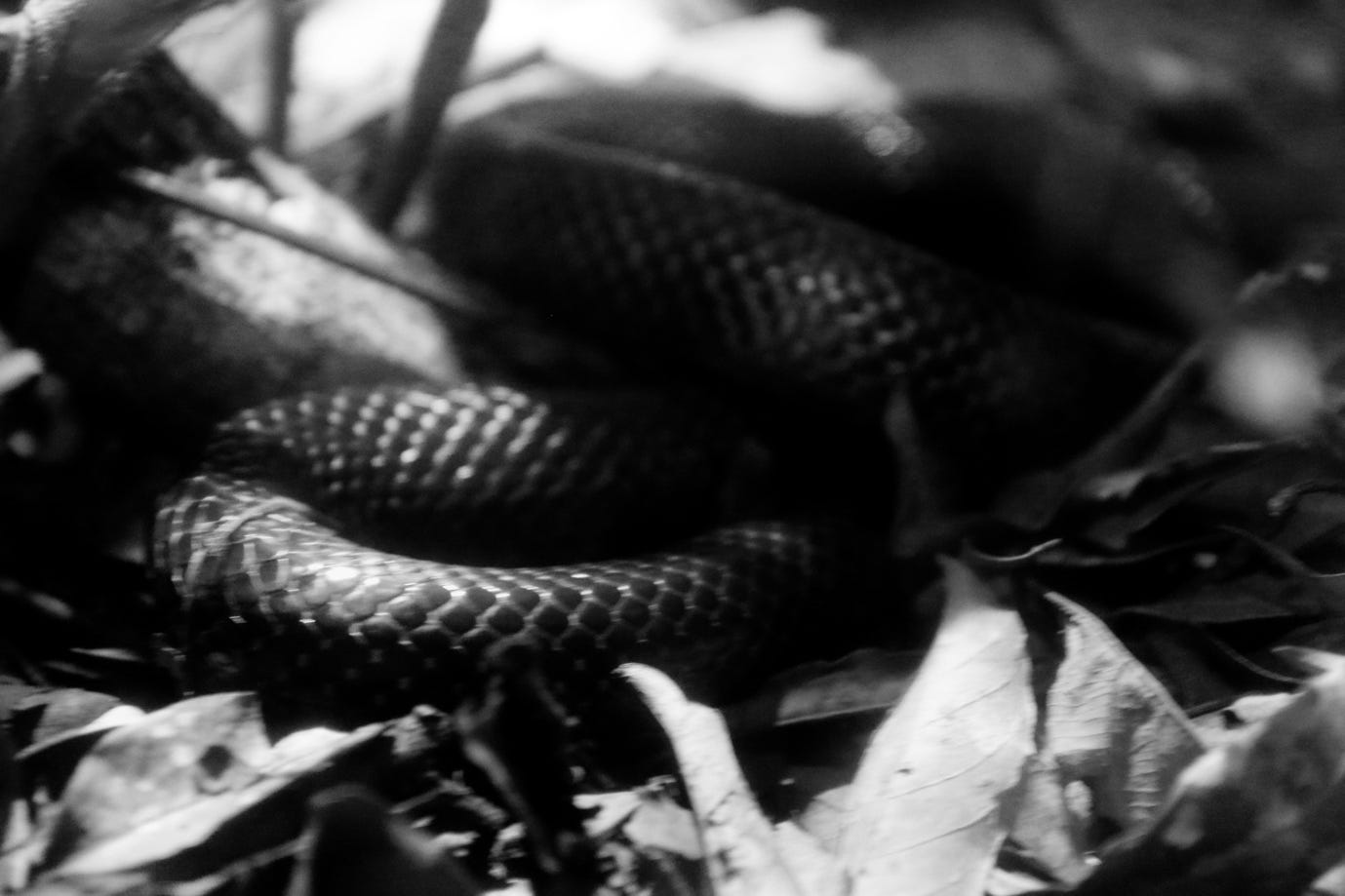
Beside the amygdala is the hippocampus, named for its resemblance to a seahorse, which supplies context. A snake behind glass at the zoo and a snake in the kitchen produce the same image on the retina; the hippocampus tells them apart. With the medial prefrontal cortex it acts as a brake, telling the amygdala that the danger has passed or that this place is safe. Recovery from fear is largely new learning of this kind, called extinction: a memory of safety laid over the memory of danger, which remains.
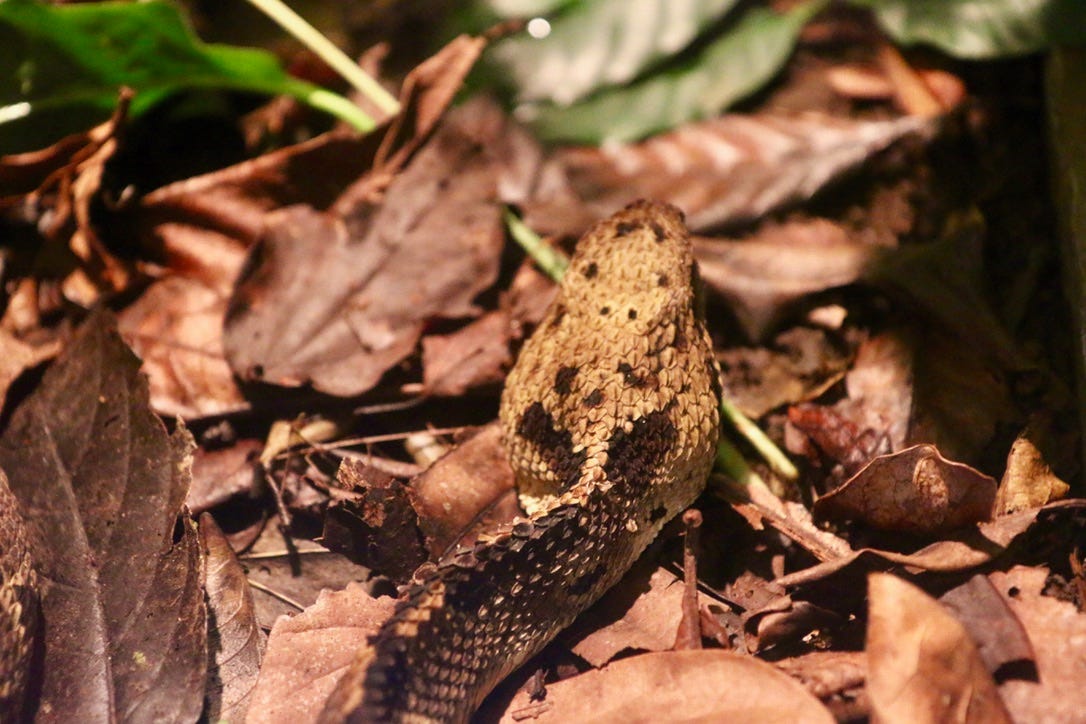
Chronic stress prunes the branching of hippocampal neurons and impairs the birth of new ones, while the same hormones make the amygdala more reactive. Sustained distress thus weakens the structure that provides context and calm, and strengthens the one that raises the alarm. The Buddha spoke of this as two arrows: the first is the pain that strikes us; the second we fire into ourselves by our reaction to it. Gerard Manley Hopkins, writing out of his own desolation, knew this:
O the mind, mind has mountains; cliffs of fall/ Frightful, sheer, no-man-fathomed.
The rewritten past: memory reconsolidation
The Moving Finger writes; and, having writ/ Moves on: nor all thy Piety nor Wit/ Shall lure it back to cancel half a Line/ Nor all thy Tears wash out a Word of it. (Omar Khayyām, trans. Edward FitzGerald, 1859)
For most of the twentieth century, neuroscience agreed with Khayyām. A memory, once formed, was thought to pass through a brief fragile phase and then be ‘consolidated’, fixed in the synapses by the synthesis of new proteins. It could fade, but it could not be rewritten.
In 2000, Karim Nader, Glenn Schafe and Joseph LeDoux overturned this view in a short paper in Nature. They trained rats to fear a tone paired with a mild shock. Days later, long after the memory should have been fixed, they played the tone again and immediately infused into the amygdala a drug that blocks protein synthesis. The fear disappeared. Rats given the drug without hearing the tone kept their fear. Recall itself had reopened the memory and made it unstable, so that it had to be stored again. They called this reconsolidation.
A memory, then, is not taken from a shelf like a book and returned unchanged. It is taken down, reassembled and put back, and in the reassembly it can be altered by whatever mood, context or information is present. Every time we remember, we rewrite.
If memory can be softened when recalled in safety, it can be hardened when recalled in distress. I made a simple mistake at the start of my maiden speech in the House of Lords. No one seems to have noticed. Yet I cringe each time I recall it, with fresh shame each time. I suspect I am only adding another layer to an incident best forgotten. The same process may explain a finding that surprised many clinicians: psychological debriefing, in which people recounted a traumatic event in detail soon after it happened, did not prevent post-traumatic stress and in some studies made it worse. Telling the story is not in itself healing.
Shakespeare’s Macbeth, unable to bear his wife’s sleepwalking anguish, pleads with her doctor:
Canst thou not minister to a mind diseased/ Pluck from the memory a rooted sorrow/ Raze out the written troubles of the brain?
Indian thought has a word for this. Saṃskāra is the impression left on the mind by every experience, and the next experience can deepen or erase it. Guru Nanak uses an image of washing in the twentieth stanza of the Japji: when hands and feet and body are soiled, water rinses away the dirt; when the mind is stained, it is cleansed only by love of the Name. The stain is washed out, as it was made, by what we repeatedly bring to it.
The suffering yet to come: predictive coding
There are more things, Lucilius, likely to frighten us than there are to crush us; we suffer more often in imagination than in reality. (Seneca, Letters to Lucilius, XIII)
We tend to think of perception as a camera: the world appears as perception and the brain records what arrives. Actually it works the other way round. The brain is a prediction machine. It constantly models what it expects to see, hear and feel, and attends mainly to the gap between expectation and arrival, the prediction error. That is partly why placebos ease pain and nocebos worsen it.
A brain that predicts can also rehearse what has not happened. That is its great evolutionary advantage, and the source of a peculiarly human suffering. In the wild, fear comes in short, intense bursts as a predator gives chase; if the prey survives, the stress response switches off. Modern life rarely allows it to switch off. A world that is always on, and a mind that keeps rehearsing what might go wrong, leave us unable to rest even briefly.
If anxiety predicts danger, depression predicts futility. The depressed brain carries an expectation that nothing will improve and effort will fail, so heavy that contrary evidence is discounted before it can do its work. Kind words from a friend register as pity; a small success as luck. The signals that would correct the model are muted. Telling a depressed person to look on the bright side is unkind; it is also neurologically naïve.
Guru Tegh Bahadur, the ninth Sikh Guru, wrote in one of his saloks:
Chintā tā kī kījīai jo anhonī hoe/ Ih mārag sansār ko nānak thir nahī koe (Worry only about what is not in the order of things; this is the way of the world, O Nanak, nothing here is permanent.)
The Guru was not advising indifference. He was separating change that is certain, which we can learn to accept, from the anxious rehearsal of outcomes that may never come, which we can learn to recognise for what it is.
The worn groove: trauma looping
Ordinary memories carry a date stamp. Our first day at school belongs to another being we once were, a different ship of Theseus. Traumatic memories lack this stamp. They are not remembered but relived. A smell, a sound, a fragment of memory can place the person inside the event, with the same racing heart and the same terror. The person, understandably, begins to avoid: the street, the conversation, the sleep that brings nightmares. Avoidance brings brief relief but prevents the one thing that would break the cycle, meeting the cue and finding that nothing terrible happens.

The Buddhist account of dependent origination describes a similar wheel: contact gives rise to feeling, feeling to craving or aversion, aversion to clinging, and clinging to becoming, which brings more contact. Guru Angad, the second Sikh Guru, put it in the Āsā kī Vār: haumai dīragh rog hai, dārū bhī is māhi (ego is a chronic disease, yet its remedy lies within it). The self that keeps the loop turning is also the only one who can break it.
Mechanism is not experience
Na dṛṣṭer draṣṭāraṃ paśyeḥ (You cannot see the seer of seeing. Yājñavalkya, Bṛhadāraṇyaka Upaniṣad III.4.2)
I have described the machinery of suffering: a sentinel that fires before we think, a memory rewritten each time it is read, a brain that suffers the future in advance, and loops that keep the past alive. All of it is real, measurable and increasingly treatable. Yet I cannot once described what suffering is like, just like the famous essay by Thomas Nagel: “What is it like to be a bat?”
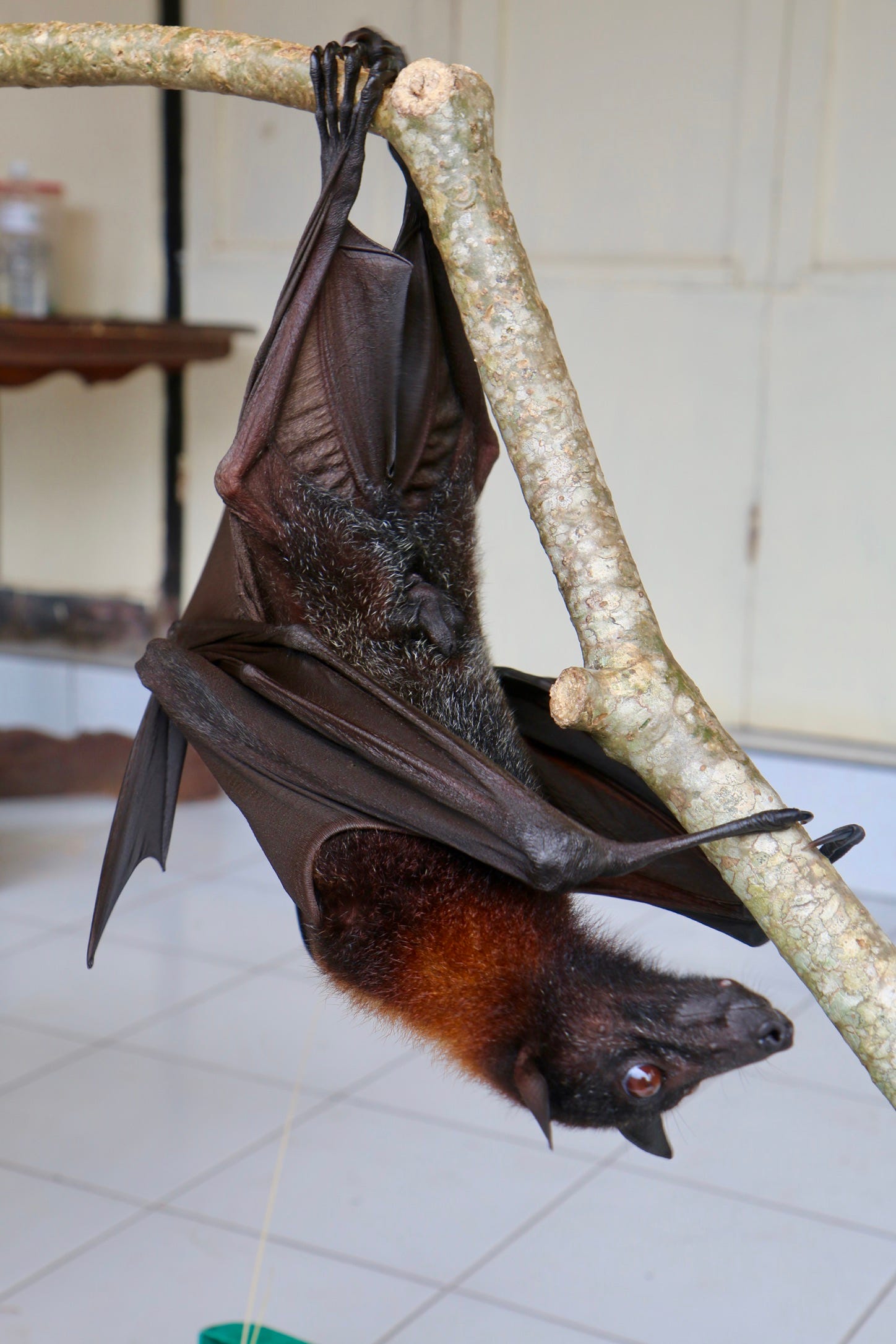
Neurobiology tells us how suffering is produced, sustained and relieved. It does not tell us what it is from the inside. The amygdala fires; the person is afraid. The two are reliably correlated, but the second is not contained in the first. Yājñavalkya saw this nearly three thousand years ago: the seer cannot be seen, because it is the one doing the seeing.
As a psychiatrist I confront this every working day. I have never felt a patient’s pain. I have heard it described, watched it on a face, seen it in posture and in silence, and asked people to rate it from nought to ten. What I call empathy is a model, built by analogy with my own experience and checked against what the other person tells me. It is often accurate enough to help. It is never direct.
We do not, then, know that others suffer in the way we know that we do. We infer it from resemblance: they have bodies and brains like ours, faces that contort as ours do, and they tell us so in a language we share. But it is an inference, and inferences have limitations.
Everything that lives
Savve pāṇā piyāuyā suhasāyā dukkhapaḍikūlā (All beings are fond of life; they like pleasure and hate pain Ācārāṅga Sūtra I.2.3)

If my knowledge that you suffer rests on inference from resemblance, then the circle of beings I recognise as suffering is drawn by my imagination. The 2024 New York Declaration on Animal Consciousness concluded that conscious experience is a realistic possibility in all vertebrates and many invertebrates, including insects and octopuses. I go further. I believe all living beings suffer, plants and single-celled organisms included. Don’t ask me to prove it; I can’t. But I feel it in my bones. Guru Nanak wrote in Sohila that one light shines in all beings. Blake ended The Marriage of Heaven and Hell with a line that could stand above any Jain or Sikh shrine: For every thing that lives is Holy. And Tagore, in Gitanjali: The same stream of life that runs through my veins night and day runs through the world and dances in rhythmic measures.
The only way to live, it seems to me, is to assume that all living beings suffer: the person across the desk, the dog in the street, the tree at the end of the garden, the unseen life in a drop of water. That assumption asks us to take what we need and no more, to harm only when we must, and to do even that knowingly.
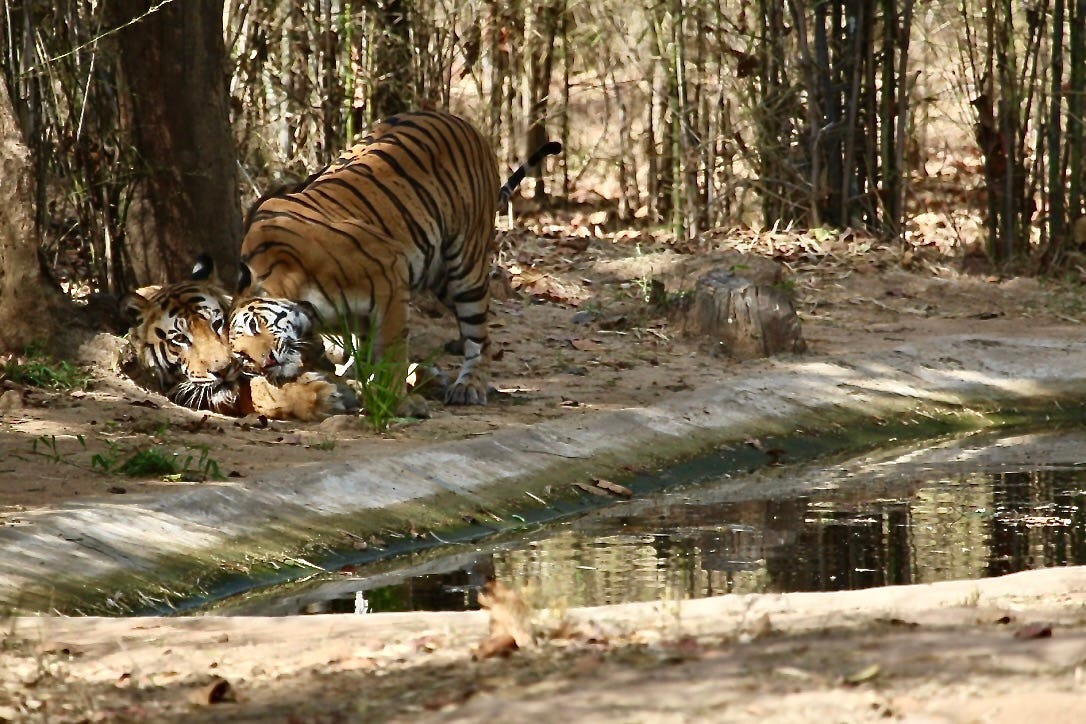
I began with Patañjali’s line that the suffering yet to come is to be avoided. Neuroscience has shown how much of our own suffering is manufactured in advance, and how much of it can be eased. It cannot show us what any other being feels, whether a bat, a neem tree or the patient in front of me. On that, science is silent, and we are left with a choice. The suffering yet to come that is most within our power to avoid is the suffering we might cause.
Thanks for reminding us that empathy is about making the effort to understand others' experience while recognizing that we can never truly know it ourselves